What Are Dental Implants Made Of? A Patient’s Guide
Key Takeaways
- Dental implants are most commonly made of titanium, a biocompatible metal that fuses directly with the jawbone in a process called osseointegration. This makes dental implants the strongest tooth replacement solution available.
- Zirconia offers a metal-free alternative that suits patients with metal sensitivities or those prioritizing aesthetics in visible areas, though it is used less frequently than titanium.
- Material choice alone does not determine implant success. The dentist's technique, the implant brand's quality standards, and your bone health play an equal role.
- SmileBox Dental Clinic is a dental implant center in Bangkok that uses official Straumann implants, one of the most clinically researched brands in the world, with 3D CBCT digital planning for every patient.
Patients from all over the world book dental implant procedures in Bangkok because they want high-quality materials, experienced surgeons, and transparent pricing that is hard to find at home. However, one question comes up at nearly every consultation: what are dental implants actually made of?
An implant is placed inside your jawbone and expected to last decades. The material used determines how well it integrates with your body, how it looks, and how long it holds up under daily use. Not all implants are the same, and not all clinics offer the same quality.
This guide covers the main types of dental implant materials, what affects the cost of implants in Thailand, and what to look for when deciding on a dental implant center in Bangkok.
What Are Dental Implants?
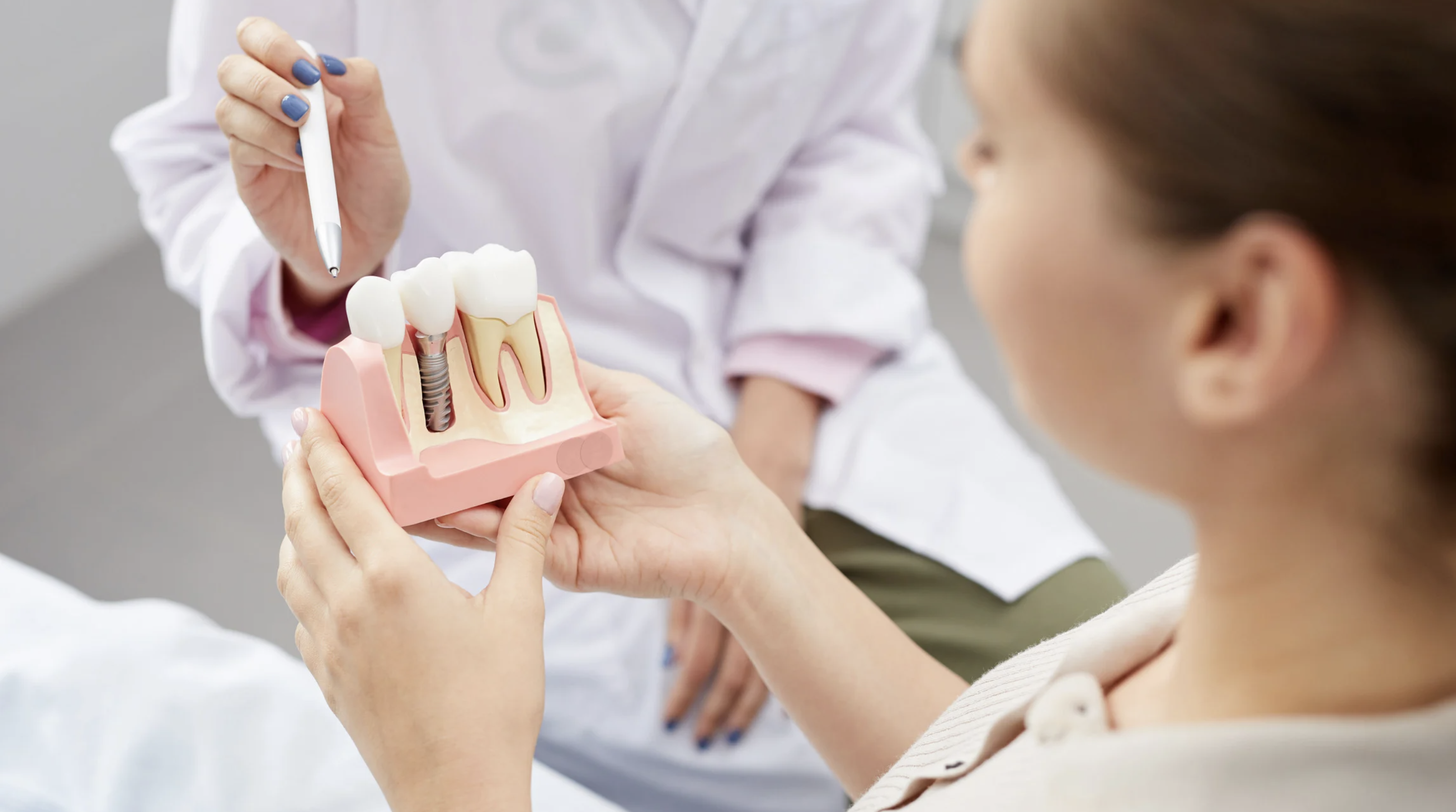
A dental implant is a small post placed into the jawbone to replace the root of a missing tooth. Once the implant fuses with the bone, a crown is attached on top to recreate a natural-looking, fully functional tooth. The result is a permanent replacement that does not slip, does not require neighboring teeth to be filed down, and does not come out at night.
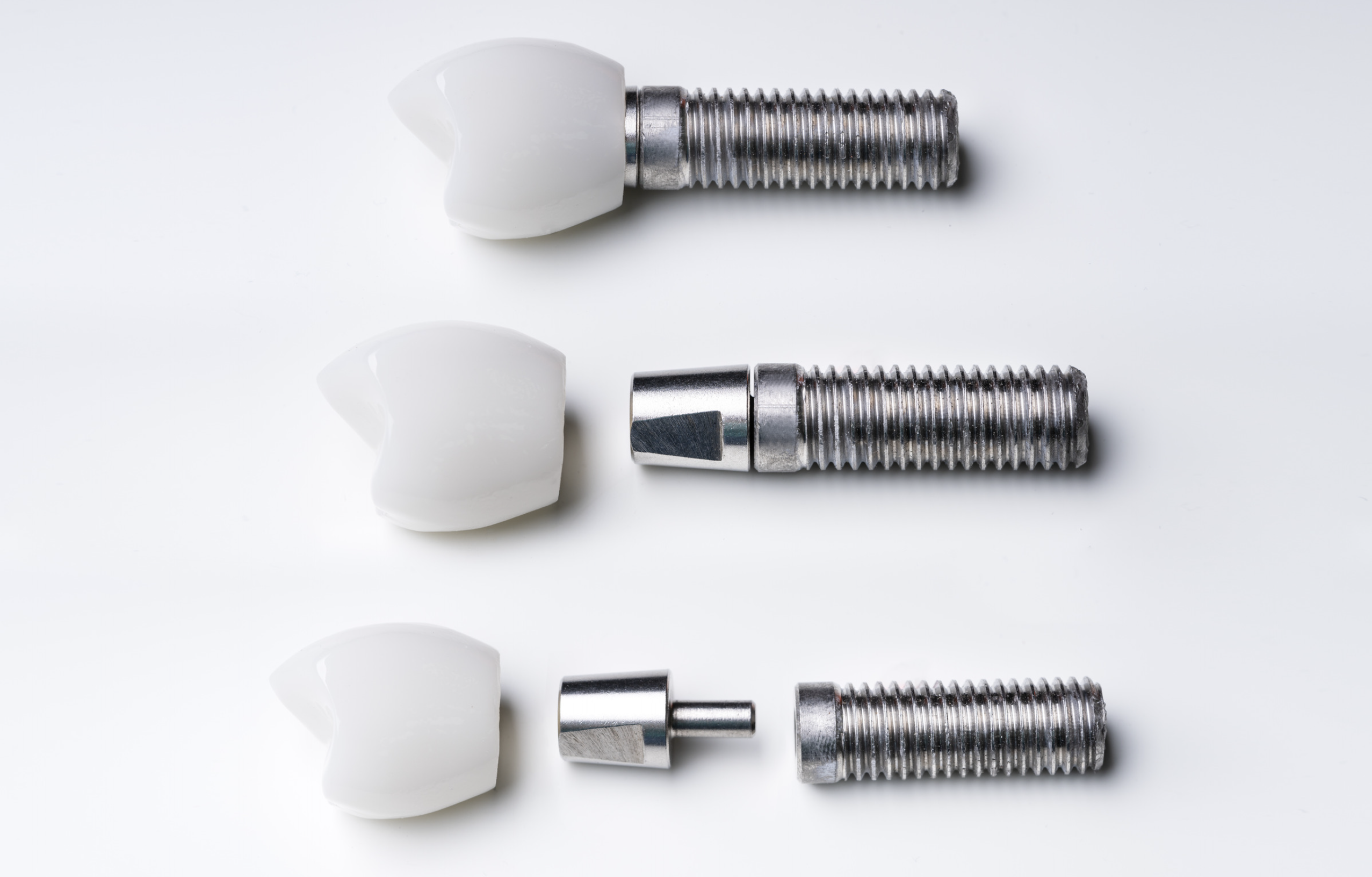
The implant itself has three components: the fixture (the post that goes into the bone), the abutment (a connector piece), and the crown (the visible tooth on top).
When patients ask what dental implants are made of, they are usually asking about the fixture, or the part that lives inside the jaw.
This matters because the fixture needs to be biocompatible. Your body has to accept it, grow bone around it, and hold it firmly in place for years.
Types of Dental Implant Materials
There are two primary materials used in implant fixtures today: titanium and zirconia. Each has distinct properties, clinical track records, and ideal use cases.
Titanium Dental Implants
Titanium is the gold standard due to its osseointegration, which is the process by which bone cells grow directly onto the implant surface, locking it in place without any adhesive or mechanical fastener. It has been used in implant dentistry since the 1960s, backed by over five decades of clinical research and millions of successfully placed implants worldwide.
It is biologically inert. Your immune system does not attack it, and bone tissue bonds to it reliably. Most implants placed globally today use some form of titanium.
There are several grades of titanium implants available:
- Grade 4 commercially pure titanium: High corrosion resistance. Used in standard implants.
- Grade 5 titanium alloy (Ti-6Al-4V): Adds aluminum and vanadium for increased strength. Often used in narrower implants where structural demands are higher.
- Roxolid (Straumann's titanium-zirconia alloy): A proprietary combination developed by Straumann that offers higher strength than pure titanium in a smaller diameter, opening treatment options for patients with limited bone width.
In very rare cases, patients report mild titanium sensitivity, and in thin gum tissue areas, a faint grey shadow can occasionally show through. For the vast majority of patients, neither of these is a concern.
Zirconia Dental Implants
Zirconia is a white ceramic material that has grown in clinical use as a metal-free implant option over the past decade. For patients with documented metal sensitivity, whose gum tissue is very thin, especially in the smile zone, or who prefer something metal-free, zirconia is a good alternative.
Zirconia integrates with bone and is also biologically inert. It does not corrode. Because it is white rather than grey, there is also no risk of shadowing through thin gums.
These implants are typically one-piece (the fixture and abutment are combined), which can limit the angulation options a surgeon has during placement.
Titanium vs. Zirconia Dental Implants: Summary Table
| Feature | Titanium | Zirconia |
|---|---|---|
| Material type | Metal (biocompatible) | Ceramic (metal-free) |
| Clinical track record | 50+ years of research, survival rates above 95% at 10 years | Credible medium-term data, but long-term evidence is still catching up |
| Biocompatibility | Biologically inert, bonds reliably with bone tissue | Biologically inert and corrosion-resistant, bone integration comparable to titanium |
| Aesthetics | Grey color can show as a faint shadow through very thin gum tissue | The white color eliminates any risk of shadowing, ideal for the front smile zone |
| Design flexibility | Available in multiple grades and two-piece designs for precise angulation | Typically one-piece, which limits angulation options during placement |
| Durability under force | High strength, suitable for full-arch restorations and heavy bite loads | More brittle under extreme lateral forces, unsuitable for patients who grind |
| Metal sensitivity | Rare cases of mild sensitivity reported | No metal content, zero sensitivity risk |
| Cost | Standard to premium (varies by brand and grade) | Generally higher than standard titanium |
| Best suited for | Most patients, full-arch cases, posterior teeth, patients with adequate bone | Patients with metal sensitivity, thin anterior gum tissue, metal-free preference |
How to Choose the Right Implant Material
No two cases are identical. The factors that shape the recommendation include:
- Jawbone density and volume: Dense bone gives more latitude on material. Narrow ridges may benefit from a titanium alloy like Roxolid.
- Gum tissue thickness: Thin gums in the front smile zone make zirconia more attractive aesthetically.
- Metal sensitivity history: Documented titanium sensitivity is rare, but when it exists, zirconia is the clear path.
- Number of teeth being replaced: Full-arch restorations (All-on-4 or All-on-6) almost always use titanium because of the structural demands.
- Budget: Zirconia implants typically cost more than standard titanium. Premium titanium brands like Straumann also carry a higher price than generic alternatives.
This is why a 3D CBCT scan is a must. At SmileBox Dental Clinic, 3D CBCT scanning and digital treatment planning are standard before any dental implant procedure.
How Much Do Dental Implants Cost in Thailand?
Prices of dental implants in Bangkok typically range from ฿35,000 to ฿80,000 per implant (approx. USD 1,046–2,392*), depending on the implant brand, crown material, and complexity of the case.
What drives the price variation within Thailand itself?
- Implant brand: Straumann and Nobel Biocare implants cost more than Korean or Chinese alternatives because of their research investment, manufacturing precision, and documented clinical outcomes.
- Crown material: Zirconia crowns are more expensive and more lifelike than PFM (porcelain-fused-to-metal) crowns. Most patients paying for a premium implant choose a zirconia crown to match.
- Case complexity: If you need a bone graft before the implant can be placed, that adds cost and healing time. This is more common in patients who lost the tooth years ago and have experienced some bone loss since.
- Number of implants: Full-arch restorations using four or six implants to support a full set of teeth cost more in absolute terms but far less per tooth than replacing each tooth individually.
SmileBox provides itemized treatment plans for every implant case. You see the full breakdown before you commit, including implant brand, crown material, and any additional procedures like bone grafting.
*Figures converted based on current exchange rates. Please view exchange rates at the time of reading for the latest figure.
How Long Do Dental Implants Last?
A well-placed titanium implant fixture can last 20 years or more with proper care. Meanwhile, roughly 19 out of 20 zirconia implants studied are still functioning after 10 years, though the research base is newer and long-term data beyond 10–15 years is still being collected.
The crown on top, whether zirconia or high-quality ceramic, typically lasts 15–25 years before wear or a chip may require replacement.
Three factors determine how long your implant lasts:
- Surgical precision: Correct positioning and depth during placement prevent early failure and long-term bone loss around the implant.
- Implant quality: Premium implant brands with decades of clinical evidence behind them perform more predictably over time than generic alternatives sold at a fraction of the price. This is one area where cost-cutting carries real long-term risk.
- Patient hygiene: Peri-implantitis (inflammation around the implant) is the main cause of late-stage failure, and it is largely preventable with consistent brushing, flossing, and professional cleaning.
Your implant is only as good as its maintenance. Ongoing care, including regular check-ups and professional cleaning, should be part of the treatment plan.
Why SmileBox Is a Trusted Dental Implant Center in Bangkok
Our team at SmileBox treats implant patients from across Thailand and around the world. We use only verified, clinically proven materials and plan every case digitally before treatment begins.
- Official Straumann Partner: Our patients receive genuine Swiss-engineered Straumann implants backed by over 60 years of clinical research, with full manufacturer traceability on every component.
- 3D CBCT scanning and digital treatment planning: Every implant case is planned digitally before any procedure begins, so patients can visualize their expected results and the material that will be used.
- Strict sterilization and hygiene standards: We meet the Thai government's highest hygiene and safety standard for medical facilities, verified through regular compliance audits including consistent infection-prevention practices, appropriate instrument sterilization, surface disinfection, hand hygiene, personal protective equipment, and sterilization monitoring.
- VR anxiety management; our clinic uses Oculus headsets during procedures to help patients manage dental anxiety, a service no other major Bangkok dental clinic currently offers.
- Multilingual team: We speak English, Thai, Japanese, Arabic, Mandarin, and Hindi, so international patients can communicate comfortably at every stage of treatment.
- Virtual consultations: Overseas patients can discuss their case, send photos, and receive an itemized treatment plan before booking any travel.
- Two Bangkok locations: Thonglor on Sukhumvit and Riverside on Ratchapruek, both equipped with the same diagnostic and surgical technology.
Understanding what dental implants are made of gives you a stronger foundation for an important decision that affects both confidence and long-term oral health.
Titanium remains the most proven material for most patients, with zirconia as a strong alternative in specific cases. Beyond material choice, the implant brand, the surgeon's skill, and the clinic's diagnostic process all shape the outcome.
SmileBox Dental Clinic is a dental implant center in Bangkok led by Dr. Vishesh Bhatia and Dr. Vikram Bhatia, both experienced implant specialists who have placed thousands of implants using Straumann systems and full digital workflows. If you are considering dental implants, book a free virtual consultation and speak with our team directly.
Contact SmileBox Dental Clinic
Phone : (+66)2-402-9542
WhatsApp : (+66)63-352-3691
Email : [email protected]



References
- Optimizing Osseointegration in Dental Implantology: A Cross-Disciplinary Review of Current and Emerging Strategies. Retrieved 10 June, 2026, from https://pmc.ncbi.nlm.nih.gov/articles/PMC10685082/
- A Systematic Review of the Clinical Survival of Zirconia Implants. Retrieved 10 June, 2026, from https://pmc.ncbi.nlm.nih.gov/articles/PMC4992030/
Frequently Asked Questions About Dental Implant Materials
A dental implant is a small titanium or zirconia post placed into the jawbone to replace the root of a missing tooth. Once the post fuses with the bone, a crown is placed on top to create a permanent, natural-looking tooth replacement. Unlike dentures, implants do not slip or require adhesive, and they do not rely on neighboring teeth for support. They are considered the most reliable and long-lasting tooth replacement available.
With good oral hygiene and regular check-ups, a titanium implant fixture can last a lifetime. Clinical data consistently shows survival rates above 95% at 10 years, with many implants remaining in place at 20 years and beyond. The crown on top typically lasts 15–25 years before it may need replacing due to normal wear. The implant brand, surgical technique, and patient care habits are the three main factors that determine how long an implant performs.
Dental implants in Thailand cost significantly less than in Western countries, typically up to 50–60% less depending on the implant brand and case. A single implant at a quality Bangkok clinic using a premium brand like Straumann generally falls in the range of ฿50,000–฿80,000. Budget options using lesser-known brands start lower but carry some risk. SmileBox Dental Clinic offers Straumann implants with full 3D digital planning and transparent pricing. Book a virtual consultation to get an accurate quote for your case.
Zirconia is not better or worse than titanium. It is different and better suited to specific situations. Titanium has over 50 years of clinical evidence, higher versatility, and superior strength for full-arch restorations. Zirconia is the preferred choice for patients with metal sensitivity or thin gum tissue in the front smile zone, where its white color prevents any shadowing. Your implant specialist will assess your anatomy, goals, and medical history to recommend the right material for your case.