What Dental Problems Can Invisalign Fix?
Key Takeaways
- Invisalign treats more dental problems than most people expect, including crowding, gaps, and most bite issues.
- Overbites caused by tooth position usually respond well to clear aligners, while jaw-based overbites may need a different or combined approach.
- A proper assessment at the first consultation confirms whether a case qualifies before any commitment is made.
- Mild cases finish in about 6 months, while moderate crowding or bite correction typically runs 12 to 18 months.
- A retainer is part of the plan from the end of treatment onward to keep teeth from shifting back.
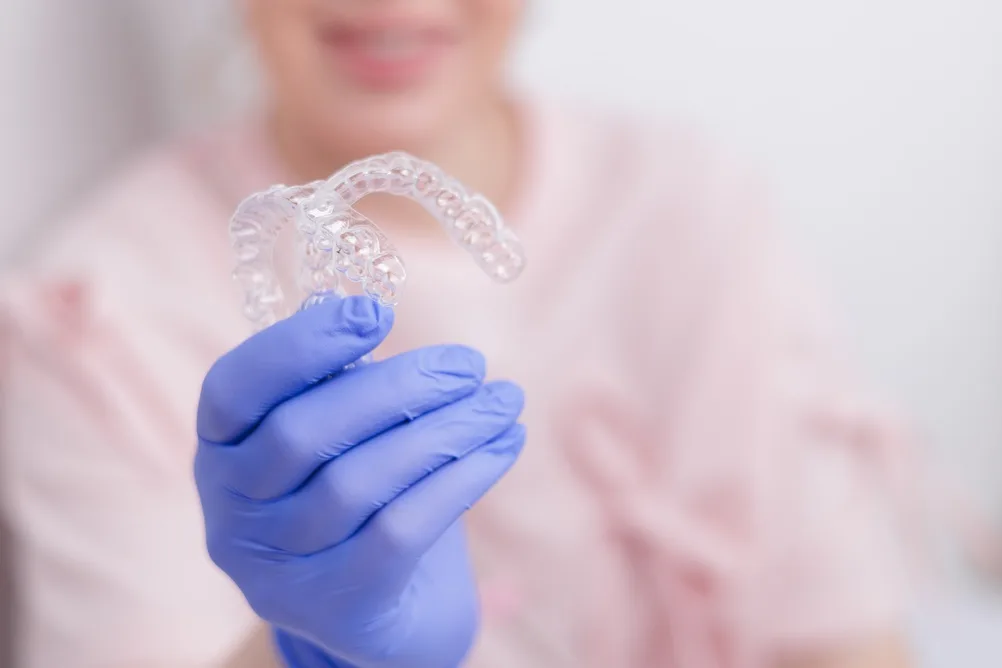
Crooked teeth, a noticeable overbite, or gaps that catch food have most adults asking the same question before anything else: can Invisalign actually fix it, or are metal braces the only option? The sections below cover what Invisalign can fix, where it genuinely is not the right tool, how long treatment takes, and how to confirm the right fit before any commitment.
What Is Invisalign and How Does It Work?
Invisalign straightens teeth using a series of custom-made clear aligners that gradually guide them into their ideal position, without the need for traditional brackets or wires. The treatment process is designed to be discreet, comfortable, and tailored to your unique smile goals, and it generally consists of two key stages.
The aligners
Each Invisalign aligner is crafted from a smooth, medical-grade thermoplastic material and designed to apply gentle, precisely controlled pressure to specific teeth. As treatment progresses, patients switch to a new set of custom aligners every one to two weeks, gradually moving their teeth according to a carefully planned sequence. This staged approach allows for predictable, controlled tooth movement, helping patients achieve their desired smile with comfort, accuracy, and minimal disruption to daily life.
Attachments and elastics
For more complex movements, such as correcting a bite or rotating a particular tooth, small tooth-colored attachments are bonded to the teeth to give the aligners more grip. Elastics may also be added to guide the upper and lower arches into place. Both are routine additions and do not change how discreet the treatment looks.
Which Dental Problems Can Invisalign Fix?
Clear aligners are approved for a broad range of orthodontic cases. Invisalign works for crowding and gaps, as well as most bite problems:
- Crowding. Aligners create space in the arch and gently shift overlapping teeth into line.
- Gaps. Teeth move together in small steps. Small front-tooth gaps often close within the first few months.
- Overbite. Invisalign can fix an overbite when it is caused by tooth position, meaning the upper front teeth sit too far over the lower teeth. Attachments and elastics guide the bite into place over time.
- Underbite. The lower front teeth sit in front of the upper teeth when biting down. Mild to moderate cases usually respond well to aligners.
- Crossbite. One or more upper teeth sit inside the lower teeth, often causing uneven wear. Aligners can shift them outward over the course of treatment.
- Open bite. The upper and lower front teeth do not meet when the back teeth close together. Aligners paired with elastics gradually bring the front teeth into contact.
The right fit for any of these cases depends on the underlying diagnosis. A proper assessment at the first consultation shows whether the problem starts with tooth position, which aligners handle well, or with jaw structure, which may call for a different or combined approach. That assessment applies across every bite type above, so patients know what aligners can realistically achieve before any commitment is made.
When Invisalign Is Not the Right Fit
Clear aligners are not a universal answer. Cases that generally fall outside their range include:
- Severe jaw misalignment that needs orthognathic surgery to correct.
- Heavily rotated canines or premolars beyond what aligners can control.
- Severe crowding that requires multiple extractions before straightening can begin.
- Teeth with short roots or significant bone loss, where aligner force may not be clinically appropriate.
Being told Invisalign is not suitable is an honest diagnosis, not a dead end. Fixed braces give the orthodontist more precise control over difficult movements, and a combined plan that uses braces for one stage and aligners for another may deliver a better result when a case has mixed requirements.
What to Expect During Treatment
First visit
The first visit begins with a digital scan and a 3D simulation that shows the projected result. Patients see where their teeth are heading before any aligner is made, which makes it easier to set expectations and decide with confidence.
Wearing the aligners
For the trays to work on schedule, they need to be worn for about 20 to 22 hours a day and removed only for eating, drinking anything other than water, and cleaning the teeth. Patients switch to a new tray every 1 to 2 weeks, with check-ups at the clinic every 6 to 8 weeks to confirm progress is on plan.
Timeline and retention
Mild cases often finish in about 6 months, moderate crowding or overbite correction runs 12 to 18 months, and complex cases may take longer. Mid-treatment scans are sometimes used to refine the final stages when teeth move slightly off plan, which is a normal part of treatment rather than a setback. After the last aligner, a retainer holds teeth in their new positions, since teeth tend to shift back without one.
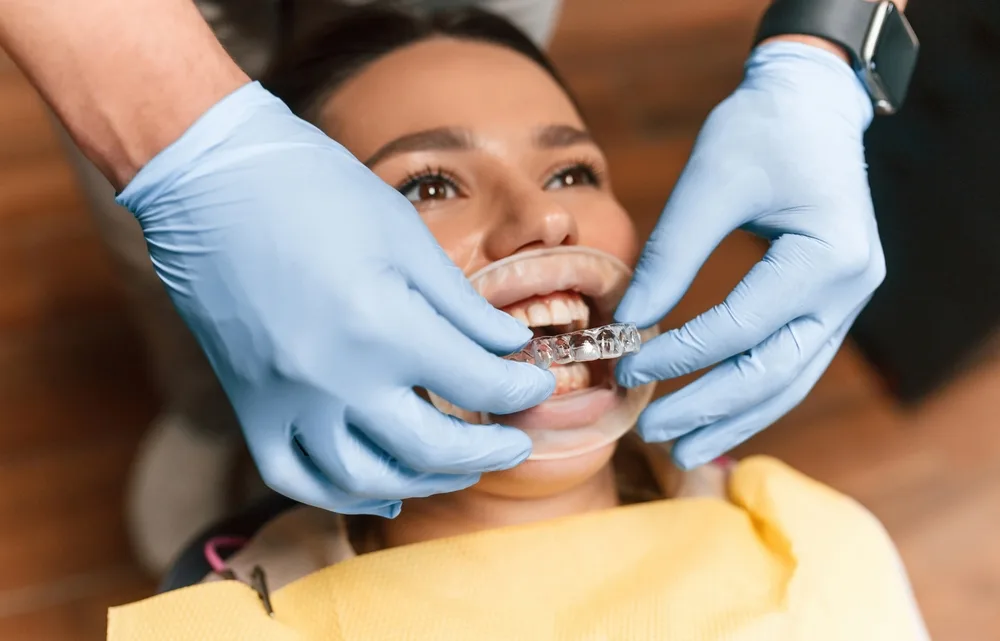
Why Patients Choose SmileBox for Invisalign
Recognized as an Invisalign Platinum Elite Provider in both 2024 and 2025, SmileBox is ranked among the top Invisalign clinics in Thailand, reflecting its extensive experience in clear aligner treatment. Led by Dr. Vishesh Bhatia and Dr. Vikram Bhatia, the clinical team has successfully treated more than 1,000 Invisalign patients, with every treatment plan personally reviewed to ensure precision and optimal results.
Each Invisalign journey begins with advanced 5D iTero digital scanning and the Invisalign Outcome Simulator, giving patients a detailed preview of their expected smile transformation before aligners are produced. Every case undergoes a comprehensive assessment and customized treatment planning process to maximise predictability and treatment efficiency. For international patients, SmileBox also offers convenient virtual consultations, allowing treatment discussions, smile evaluations, and initial planning to begin before travelling to Bangkok.
If you are looking for a trusted dental clinic for Invisalign in Bangkok, schedule a consultation with SmileBox to find out whether aligners are the right fit for your case.
Contact SmileBox Dental Clinic
Phone : (+66) 2-402-9542
WhatsApp : (+66) 63-352-3691
Email : contact@smileboxclinic.com



References
- Clear Aligners. Retrieved 3 November 2026, from https://my.clevelandclinic.org/health/treatments/clear-aligners
- What is Clear Aligner Orthodontic Therapy? Retrieved 3 November 2026, from https://www.hsdm.harvard.edu/faq/what-clear-aligner-orthodontic-therapy
Frequently Asked Questions About Invisalign
In most cases, yes, when the overbite is caused by tooth position. Aligners paired with small tooth-colored attachments and elastics, both standard parts of the Invisalign system, guide the bite into place over time. If the overbite is caused by jaw structure, a different approach may be needed, which the assessment at the first consultation will show.
Yes. Crowding and gaps are two of the most common issues clear aligners treat. Mild gaps often close within the first few months, and crowding corrects in stages as the aligners shift overlapping teeth into position.
Mild cases often finish in about 6 months. Moderate crowding or overbite correction usually runs 12 to 18 months. More complex cases may take longer, and the timeline is set at the planning stage once your case has been reviewed.
Yes. Retainers are part of the treatment plan from the start. Teeth naturally tend to shift back toward their original position without one, so retention protects the result over the long term.