Invisalign vs Braces: What to Know Before Choosing
Key Takeaways
- Invisalign uses removable clear aligners worn 20 to 22 hours a day. Metal braces use fixed brackets and wires that work around the clock.
- Starting costs in Bangkok are similar for both options. The gap widens with case complexity, aligner count, or longer treatment times.
- Metal braces are often used for severe bite corrections and heavily rotated teeth. Invisalign suits mild to moderate cases that favor a near-invisible look.
- Invisalign treatment runs 6 to 18 months for most cases, with daily wear compliance as the key variable. Metal braces average 18 to 24 months, with regular adjustment visits keeping the timeline on track.
- The right choice depends on the clinical diagnosis, lifestyle, and budget, not personal preference alone.
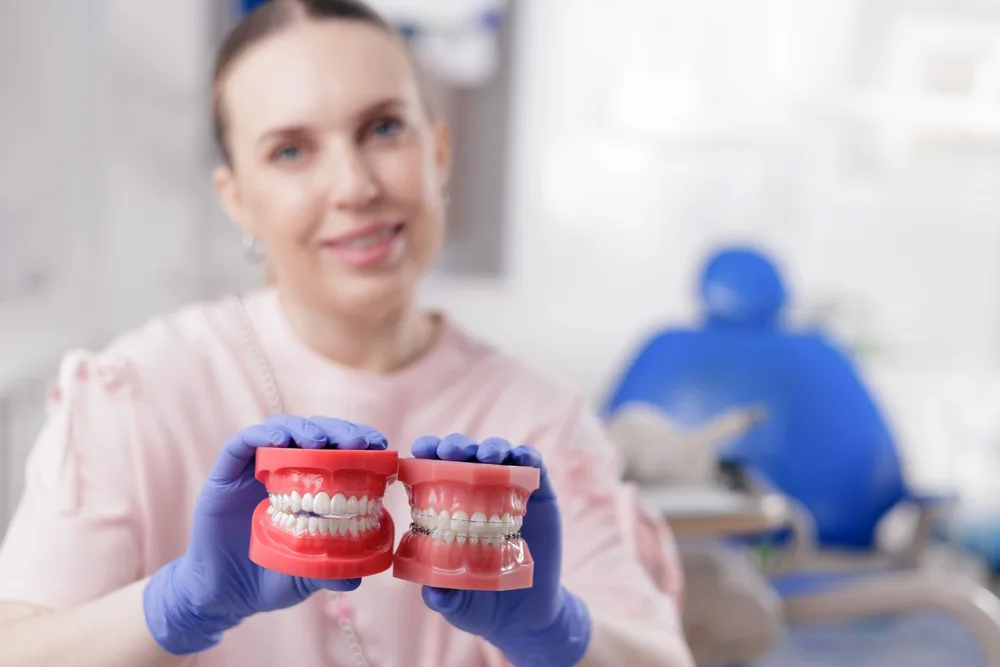
Choosing between clear aligners and fixed brackets is one of the most common orthodontic decisions adults face. Both straighten teeth, but they do it differently, feel different, and fit different lifestyles. The sections below explore key differences in mechanics, cost, comfort, timeline, and limitations between Invisalign vs braces to help prepare you for your consultation.
How Invisalign and Metal Braces Actually Work
The difference starts with the hardware itself and how it moves teeth day to day:
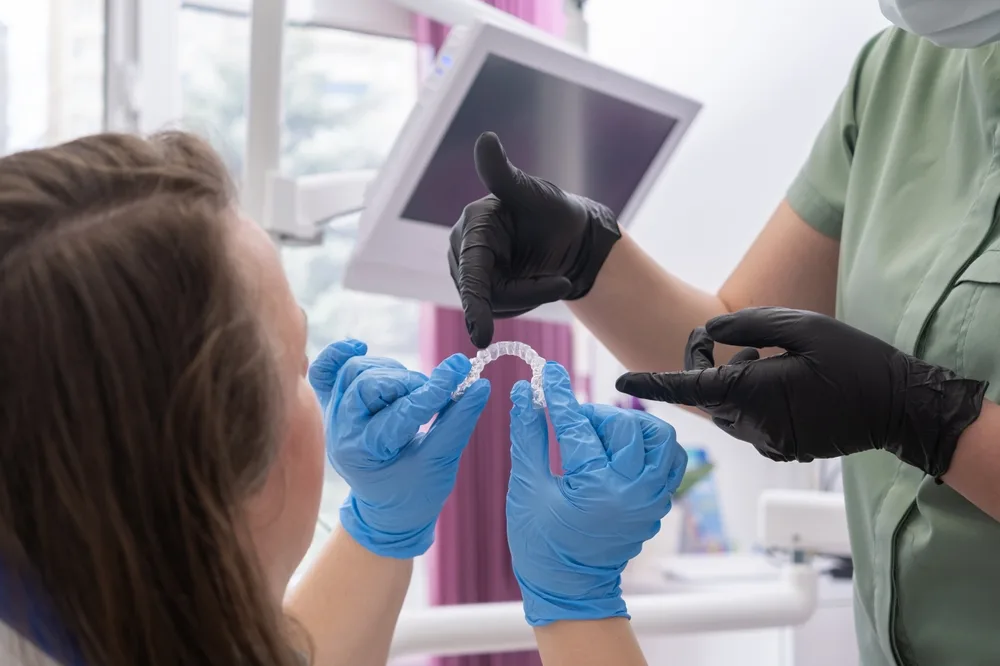
- Invisalign: A series of custom clear aligners applies gentle, targeted pressure. Each set moves teeth a fraction of a millimeter, and patients swap to a new set every one to two weeks. Aligners need 20 to 22 hours of daily wear to stay on track.
- Metal braces: Fixed brackets are bonded to each tooth and connected by an archwire. The dentist adjusts the wire at regular appointments to guide teeth into position. Braces work around the clock whether the patient thinks about them or not, which is why they are often the default for younger patients or anyone who struggles with removable appliances.
Invisalign vs Braces Cost in Bangkok
Starting costs for both options sit in a similar range in Bangkok. The gap widens with case complexity, longer treatment time, or more aligner sets.
At SmileBox, the cost breakdown looks like this:
- Invisalign Express Program starts from THB 53,900 (approx. USD 1,590), and the full Invisalign Program can reach THB 200,000 or more (approx. USD 5,900) for complex full cases. The total depends on the number of aligner sets and overall case complexity.
- Metal braces start from THB 52,000 (approx. USD 1,535). Additional costs may apply for extractions, retainers, or extended treatment time.
Payment plans are available for both treatments. The final figure is confirmed once your case has been reviewed in full at the consultation.
Comfort, Hygiene, and Daily Life
How each option feels day to day often matters as much as cost or timeline:
- Eating and drinking. Invisalign aligners come out for meals, so there are no food restrictions. Metal braces stay on 24/7, and hard, sticky, or chewy foods can damage brackets or wires.
- Brushing and flossing. With aligners, patients brush and floss normally. With braces, cleaning around brackets takes more time and often needs floss threaders or interdental brushes.
- Comfort. Invisalign tends to cause mild pressure when switching to a new set, which usually settles within a few days. Braces can irritate the inside of the lips and cheeks, especially after adjustments, though orthodontic wax helps while the mouth adjusts.
- Appearance. For patients who travel frequently or have client-facing jobs, the near-invisible look of aligners is a practical advantage.
Treatment Time and What Affects Results
The following outlines treatment length and the factors that influence the final result for each option:
- Invisalign timeline: Simple cases wrap up in about 6 months, while full treatment typically runs 12 to 18 months.
- Metal braces timeline: Treatment averages 18 to 24 months, extending further when severe crowding or bite issues are involved.
- What affects Invisalign results: Compliance is the deciding factor, because wearing aligners fewer than 20 hours a day slows progress and can shift the final tooth position away from the plan.
- What affects braces results: Appointment attendance is the equivalent variable, since the archwire has to be tightened or replaced at regular visits to keep teeth moving on schedule, and missed appointments stretch the timeline.
Where Each Option Falls Short
Neither treatment is a universal answer, and each comes with its own set of limitations:
Invisalign is not ideal for severe bite corrections, significant jaw discrepancies, or heavily rotated teeth, and even within its range, some cases need attachments or elastics that reduce the near-invisible advantage. On top of that, compliance is the biggest variable, because losing or skipping trays sets back the schedule and, over time, affects the final alignment.
Metal braces are more visible, harder to clean, and require dietary adjustments, all of which show up in daily routines rather than one-off inconveniences. Alongside that, emergency visits for broken brackets or poking wires are common and tend to add unplanned appointments to the overall plan.
The right choice depends on the clinical diagnosis, the patient's lifestyle, and in some cases, a combined plan that uses braces for one stage and aligners for another.
Why Patients Choose SmileBox for Orthodontic Treatment
SmileBox handles both aligner and braces cases at its Thonglor and Riverside locations, with Dr. Vishesh Bhatia and Dr. Vikram Bhatia overseeing every treatment plan personally. The clinic has been recognized as an Invisalign Platinum Elite Provider for 2024 and 2025, and the clinical team has treated more than 1,000 Invisalign cases alongside its fixed braces work.
Every case begins with a digital scan and a detailed assessment, so patients see the plan and the projected result before making any commitment. However, the final outcome, duration, and number of visits still depend on the individual and a doctor's evaluation. Aligner and metal braces treatments each follow their own customized plan in a calm, patient-focused setting for anyone who finds dental visits stressful. Overseas patients can also start earlier through virtual consultations that cover an initial assessment and planning before travel.
Still weighing your options? Book a consultation at SmileBox, a dental clinic for Invisalign or braces in Bangkok, and the doctors will map out the path that fits your bite and your lifestyle.
Contact SmileBox Dental Clinic
Phone : (+66) 2-402-9542
WhatsApp : (+66) 63-352-3691
Email : contact@smileboxclinic.com



References
- Clear Aligners. Retrieved 13 November 2026, from https://my.clevelandclinic.org/health/treatments/clear-aligners
- What is Clear Aligner Orthodontic Therapy? Retrieved 13 November 2026, from https://www.hsdm.harvard.edu/faq/what-clear-aligner-orthodontic-therapy
Frequently Asked Questions About Invisalign and Braces
Neither is universally better. Clear aligners work well for mild to moderate cases and for patients who want a near-invisible option and can stick to 20 to 22 hours of daily wear. Metal braces handle complex corrections reliably and do not depend on patient compliance. The right choice depends on the clinical diagnosis and lifestyle, not the trend.
Most patients report that metal braces cause more discomfort than Invisalign, though both involve temporary tooth soreness because the teeth are being moved. With braces, the brackets and wires can rub against the cheeks and lips, and each wire adjustment creates a spike of pressure that lasts a few days. Emergencies such as a poking wire or a broken bracket add their own unplanned soreness, and eating hard or chewy foods can set off further tenderness. Invisalign tends to cause a shorter, milder ache for a day or two after switching to a new tray, which then settles as the teeth adjust.
Most patients describe Invisalign discomfort as mild rather than sharp. The pressure feels like a dull tightness in the first few days of each new aligner set, usually settling within 24 to 72 hours as the teeth adjust. On a 1 to 10 scale, most patients report a low number in the early days of a tray and little to nothing after that. Severe pain is uncommon and should be checked by your dentist.
The main ones are compliance and case range. Aligners need 20 to 22 hours of daily wear to stay on track, so losing or skipping trays slows progress. They may not suit severe bite corrections, significant jaw discrepancies, or heavily rotated teeth. Some cases also need attachments or elastics that reduce the near-invisible look.
True Invisalign failures are rare when patients follow the plan. The more common outcome is that teeth move slightly off the projected path and need refinement aligners to reach the final result, which is a routine part of treatment rather than a failure. Compliance, case complexity, and cases that would have suited braces better are the usual reasons an outcome falls short of plan.