Your Simple Guide to Invisalign and How It Works
Key Takeaways
- Invisalign uses a series of clear, custom-made, removable trays that guide your teeth through calculated, controlled movements planned with 3D digital software.
- The system has two parts. Tooth-colored attachments bonded to the teeth guide the movement, and clear trays apply the force. You change trays weekly at home.
- Trays are worn 20 to 22 hours each day, which leaves time for meals and for brushing and flossing.
- Most patients describe gentle pressure for the first day or two of a new tray, which eases as the teeth settle into that stage.
- SmileBox plans every case with a 5D iTero scan and a ClinCheck simulation, so you can review the projected movements and patient Invisalign before & after cases before you begin.
Wanting a straighter, more confident smile is one of the most common reasons adults visit a dentist, and clear aligners have made that an easy option to explore. Invisalign is usually the first treatment patients ask about, and they tend to arrive with two questions in mind. How does Invisalign work, and what does it feel like to wear?
The simple answer is that a series of clear, removable trays guides your teeth into position in small planned steps, and most patients feel gentle pressure as each new tray settles in. This guide covers what the treatment involves, how long it takes, and what to expect day-to-day if you are considering Invisalign in Bangkok.
What Is Invisalign and Who Is It For
Invisalign is a set of custom-made clear orthodontic aligners designed to straighten teeth through calculated, controlled movements. You wear a sequence of trays, each slightly different from the last, guiding your teeth along a planned path.
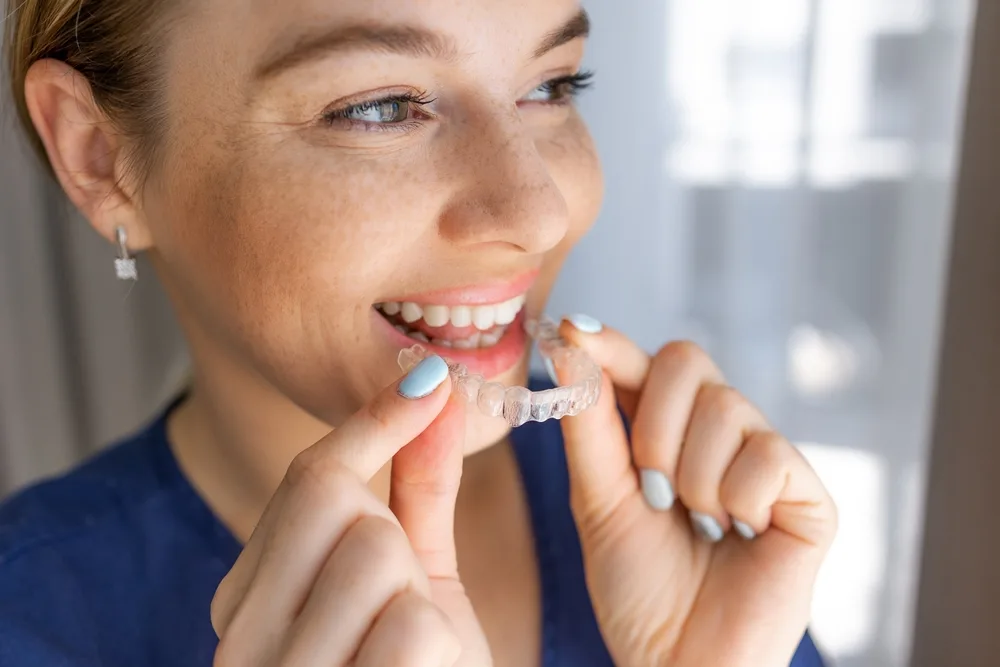
Two features make the treatment easy to live with. The aligners are close to invisible in everyday conversation, and they are removable, so you eat, drink, brush, and floss as you normally would before putting them back in.
Clear aligners are a well-established option for crooked or crowded teeth and for many mild to moderate bite concerns, which is when your upper and lower teeth do not line up as they should. Your dentist confirms whether aligners suit your case at the first consultation. Cases involving significant jaw position, or teeth needing large rotations, may be better served by another orthodontic approach, and your dentist will talk you through the options. Any cavities or gum issues are addressed initially to ensure your teeth and gums are healthy before starting with your aligners.
How Does Invisalign Work Step by Step
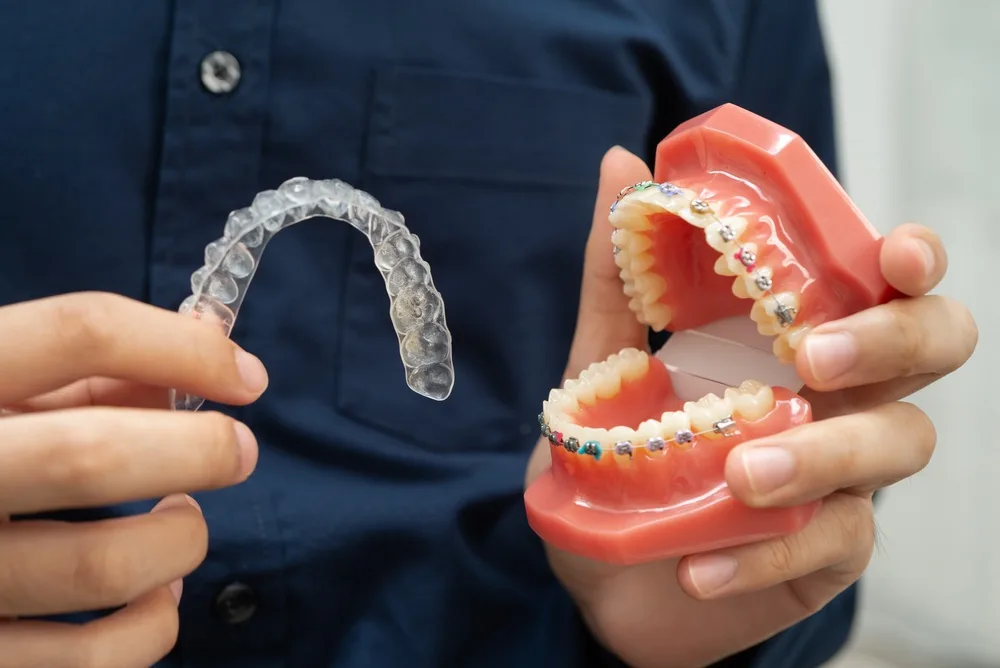
Two components do the work together. Understanding both is the clearest way to see how Invisalign works in practice.
- Attachments: Small tooth-colored pieces of composite resin are placed on specific teeth. They act like steering wheels, giving the tray something to hold so your dentist can control the direction a tooth turns or tips.
- Clear trays: Transparent, removable dental aligners cover your teeth and apply steady, mild force. Every tray moves particular teeth slightly, measured in fractions of a millimeter, prior to the next tray taking effect.
- Weekly changes: You move to the next tray at home, usually once a week, so the progress is gradual and steady.
- Daily wear: Aligners guide your teeth while they are in your mouth. SmileBox recommends 20 to 22 hours a day, which leaves comfortable time for meals and oral hygiene.
At SmileBox, the planning happens before a single tray is made. Your dentist takes panoramic and cephalometric X-rays, adds a CBCT 3D X-ray for complex cases, then captures a 5D iTero digital scan instead of traditional impressions. That scan builds a ClinCheck plan mapping where each tooth moves and in what order. You review the plan with your dentist about two weeks after your records are complete, in person or online, and your trays are made once you approve it.
Does Invisalign Hurt or Feel Uncomfortable
So, does Invisalign hurt? Most patients describe the feeling as gentle pressure or tightness rather than pain, and it is a reassuring sign that the teeth are moving as planned. Here is what patients commonly notice during treatment.
- Mild pressure in the first day or two: This is most noticeable when you start a new tray, and it settles as your teeth adjust to that stage.
- A smooth surface against your lips and cheeks: The trays are made of smooth clear material that sits closely over the teeth, with no metal components resting against the soft tissue of your mouth.
- Comfort around meals: Because the aligners come out, you eat and drink normally and keep your usual brushing and flossing routine.
- Gentle movement by design: Each tray applies gentle, continuous force, so your teeth move in small planned steps.
Published research on clear aligner treatment places any discomfort in the mild range, concentrated in the first days after a tray change. Invisalign is still an orthodontic treatment rather than a sensation-free one, so if pressure continues past those first few days, let your Invisalign doctor know. They can check the fit of your tray and your progress, and let you know whether your treatment is on track.
What to Expect From Your Treatment Timeline
Your total treatment time depends on how far your teeth need to travel, so a reliable estimate comes once your ClinCheck plan is built and reviewed. The sequence itself is predictable.
- Records and planning: Consultation, X-rays, and the iTero scan, followed by your ClinCheck review roughly two weeks later.
- Tray fabrication: About four to six weeks from plan approval, including shipping to the clinic.
- Fitting: Your attachments are placed and you are shown how to wear, remove, and clean your trays.
- Monitoring: You submit progress photos through the Invisalign app, with scheduled rechecks and virtual appointments available if you are not in Bangkok full time.
- Retention: Once your attachments are removed and your teeth are rescanned, Vivera retainers hold your new position. Wearing them as directed helps keep your teeth where your plan placed them.
Consistent wear is the part of treatment that sits with you, and keeping your trays in for the recommended hours keeps your plan on schedule.
Why Patients Choose SmileBox for Invisalign
- Recognized Invisalign experience: SmileBox dentists were designated Invisalign Platinum Providers in 2022 and 2023 and Invisalign Platinum Elite Providers in 2024 and 2025.
- Case volume behind the plan: The team has treated over 1,000 Invisalign patients, and Dr. Vishesh Bhatia and Dr. Vikram Bhatia also train other dentists in clear aligner therapy.
- Digital planning you can see: A 5D iTero scan, CBCT imaging for complex cases, and a ClinCheck simulation mean you review the projected tooth movements before treatment starts.
- Virtual reality for nervous patients: VR headsets are available during treatment to help patients feel more at ease, alongside the clinic's dedicated Invisalign Zone.
- Transparency as a working rule: Dr. Vishesh Bhatia's position is that patients are told their options, what to expect, what it costs with no hidden fees, and how to look after their oral hygiene long term. You receive an itemized quotation after your consultation.
- Built for local and overseas patients: SHA Plus+ certification, an English-speaking team, two Bangkok branches at Thonglor on Sukhumvit and Riverside at Prannok Ratchapruek, and 900,000+ combined TikTok followers from the clinic's dental education content.
A straight, confident smile may be within reach with clear aligners and the right clinical guidance. To find out whether your case suits Invisalign, book a consultation at SmileBox Dental Clinic and ask to see the scan and ClinCheck simulation for your own teeth. You can browse patient cases in the Invisalign before & after gallery, or read the full treatment process for Invisalign in Bangkok. Call +66 2402 9542 or message the team on WhatsApp at +66 63-352-3691 to arrange a time that suits you.
Disclaimer: Results may vary from person to person. Before and after images show individual results and cannot guarantee results for anyone else. Please have a dentist's assessment before treatment.
Contact SmileBox Dental Clinic
Phone : (+66) 2-402-9542
WhatsApp : (+66) 63-352-3691
Email : contact@smileboxclinic.com



References
- Clear Aligners. Retrieved November 16, 2026, from https://my.clevelandclinic.org/health/treatments/clear-aligners
- Pain level between clear aligners and fixed appliances: a systematic review. Retrieved November 16, 2026, from https://pmc.ncbi.nlm.nih.gov/articles/PMC6970090
- Comparison of pain perception, anxiety, and impacts on oral health-related quality of life between patients receiving clear aligners and fixed appliances during the initial stage of orthodontic treatment. Retrieved November 16, 2026, from https://pubmed.ncbi.nlm.nih.gov/32613250/
- Orthodontic Treatment with Clear Aligners. Retrieved November 16, 2026, from https://aaoinfo.org/whats-trending/orthodontic-treatment-with-clear-aligners/
- Invisalign. Retrieved November 16, 2026, from https://smileboxclinic.com/invisalign
Frequently Asked Questions About How Invisalign Works (FAQs)
Invisalign works through two components acting together. Small tooth-colored attachments are placed on specific teeth and act like steering wheels, giving the aligner something to hold so your dentist can control how each tooth moves. Clear removable trays then apply gentle, continuous force. You change trays weekly at home, and each one guides particular teeth a fraction of a millimeter before the next takes over. The whole sequence is mapped in advance with 3D digital planning, which at SmileBox means a 5D iTero scan and a ClinCheck plan you approve before any tray is made.
Most patients describe gentle pressure or tightness rather than pain, concentrated in the first day or two after changing to a new tray. That feeling is a normal sign your teeth are moving as planned, and it settles as they adjust to that stage. The trays are made of smooth clear material with no metal components against your lips or cheeks, which keeps them comfortable to wear through the day. Invisalign is still an orthodontic treatment, so let your Invisalign doctor know if pressure continues past those first few days.
SmileBox recommends wearing your aligners 20 to 22 hours each day. That leaves roughly two hours for meals, drinks other than water, and brushing and flossing. Your aligners guide your teeth while they are in your mouth, so consistent wear is the part of treatment most within your control. Keeping to that range helps your treatment follow the plan you approved. If your aligners are out for longer stretches, your dentist may add refinement aligners later to bring the result back in line.
Total treatment time depends on how far your teeth need to move, so a dependable estimate comes once your ClinCheck plan is built and reviewed. The stages before that are more predictable. Your ClinCheck discussion is held about two weeks after your records are complete, and tray fabrication takes roughly four to six weeks from plan approval, including shipping to the clinic. After your final tray, Vivera retainers are made once your attachments are removed and your teeth are rescanned.
Yes. Your 5D iTero scan builds a 3D model of your teeth and bite, and the ClinCheck plan shows how each tooth is expected to move, in what order, and what the projected end position looks like. You review it with your dentist in person or online before approving anything. A simulation is a planning illustration rather than a guarantee, since the result also depends on your anatomy and how consistently you wear your trays. You can also view real patient cases in the SmileBox Invisalign before and after gallery.