Using Dental Floss Picks to Improve Your Oral Health
Key Takeaways
- Dental floss picks are single-use plastic tools with a short length of floss stretched between two prongs, designed to make flossing easier than managing a long string, especially for back teeth and patients with limited dexterity.
- Proper technique matters more than which tool you use: the key is guiding the floss gently below the gumline using a C-shape motion, not snapping it down and expecting results.
- Floss picks are not the best option for everyone. Patients with braces, tight contacts, or active gum disease may benefit from specialized tools or guidance from a dental professional.
- For patients looking to build a stronger oral care foundation before considering cosmetic work like veneers in Thailand, gum health is the essential first step, and consistent flossing is where that starts.
Most people know they should floss. Fewer do it consistently, and of those who do, many are not getting the full benefit because their technique needs adjustment.
Sliding a pick quickly between teeth without following the correct motion does very little. It barely disturbs the plaque sitting against the gumline, which is exactly where gum disease begins.
This guide covers how to use dental floss picks properly, what they are made of, whether they work for braces, and when to swap in a different tool. That covers everything you need to make flossing actually effective.
What Are Dental Floss Picks and What Are They Made Of?
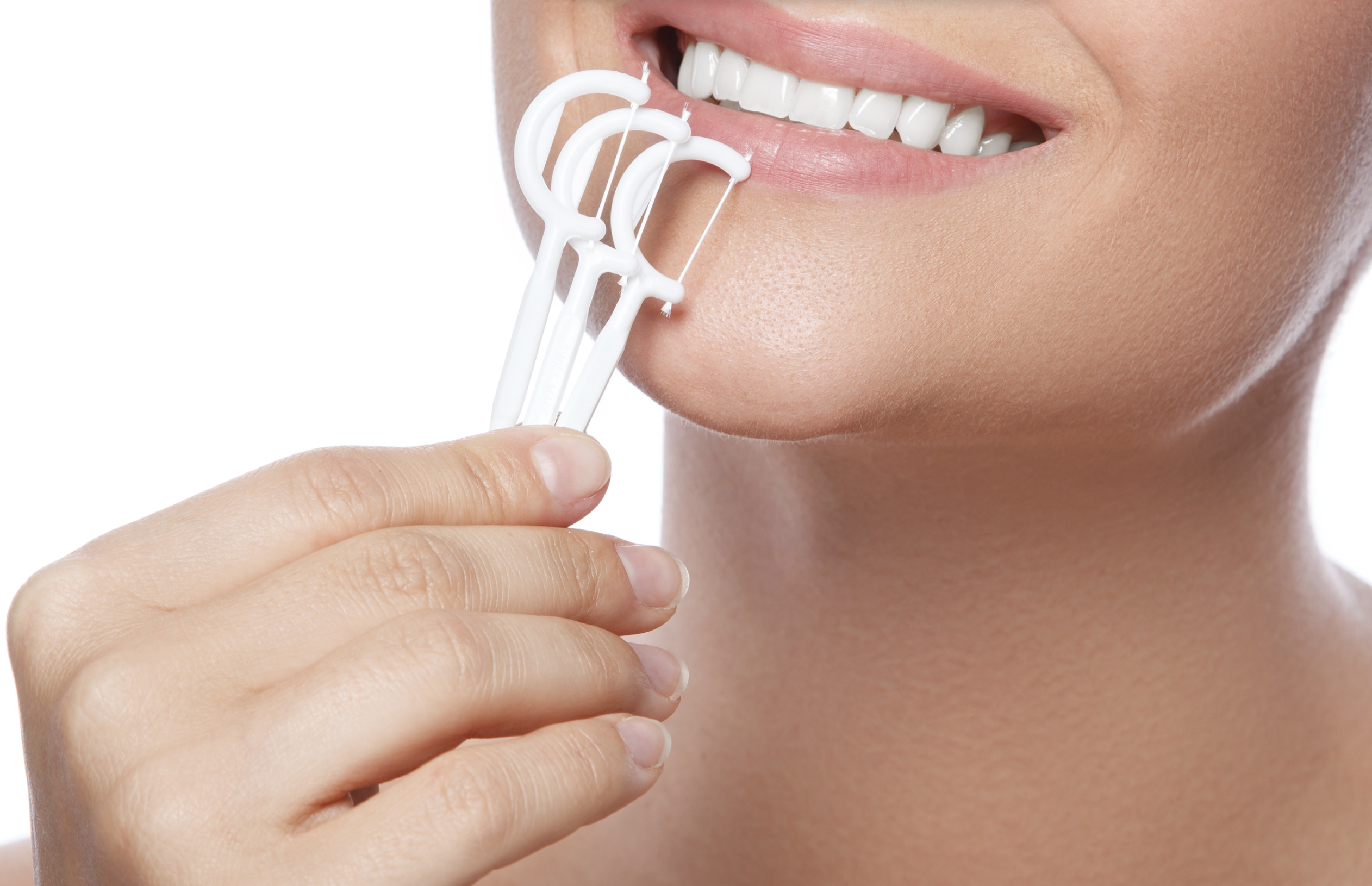
Dental floss picks are small Y- or F-shaped plastic tools with a short strand of floss stretched between two prongs. Traditional string floss requires you to wrap a length around your fingers and maneuver it through every gap. A pick gives you a ready-to-use handle that many people find easier to control, especially at the back of the mouth.
So what is dental floss made of? Both string floss and the strand on a pick are typically made from one of two materials:
- Nylon (multifilament): Multiple thin fibers twisted together. Stronger and more effective at cleaning, but more prone to shredding in tight contacts or around restorations.
- PTFE (polytetrafluoroethylene): A single-filament material that glides more easily between tight teeth and rarely shreds. Often marketed as "Glide" or "satin" floss. Found in many premium floss picks.
Some floss picks include a toothpick point at the opposite end, and many are flavored with mint. Neither feature affects cleaning performance, but mint can make the experience more pleasant, which helps with habit formation.
How to Use Dental Floss: Step-by-Step Guide
Technique is everything. A pick held correctly and moved through the right motion removes plaque from the gumline.
A pick moved quickly between teeth without proper technique will remove food debris. That helps, but it does not address the bacterial plaque along the gumline.
How to Use Traditional String Floss
- Cut about 45 cm (18 inches) of floss. Wind most of it around the middle finger of one hand, the rest around the same finger on the other hand.
- Hold a short, taut section between your thumbs and forefingers, roughly 2–3 cm of working floss.
- Slide the floss gently between two teeth using a zigzag motion. Do not snap it into the gums.
- Curve the floss into a C-shape around one tooth and slide it gently below the gumline until you feel slight resistance. Hold for a second.
- Scrape the floss up the side of the tooth (away from the gum) to remove plaque. Repeat on the adjacent tooth in that same gap.
- Move to a clean section of floss before moving to the next gap. Using the same section just transfers bacteria around.
- Floss all gaps, including behind the very last molar. That area is often skipped and is one of the more common spots for early-stage gum disease.
How to Use Dental Floss Picks
- Hold the pick between your thumb and forefinger, with the floss section facing the teeth you are working on.
- Slide the floss between two teeth using a gentle back-and-forth motion. Do not force it.
- Curve the floss around one tooth in a C-shape and slide it just below the gumline. Hold briefly.
- Scrape upward along the tooth surface to dislodge plaque. Then do the same on the neighboring tooth in that gap.
- Rinse the pick under water between teeth to clear debris. Use a fresh pick if the strand becomes frayed or worn.
The C-shape is the step most people skip. Without it, you are cleaning the contact point but missing the gumline, where the bacteria that cause gum disease live.
How to Floss with Braces
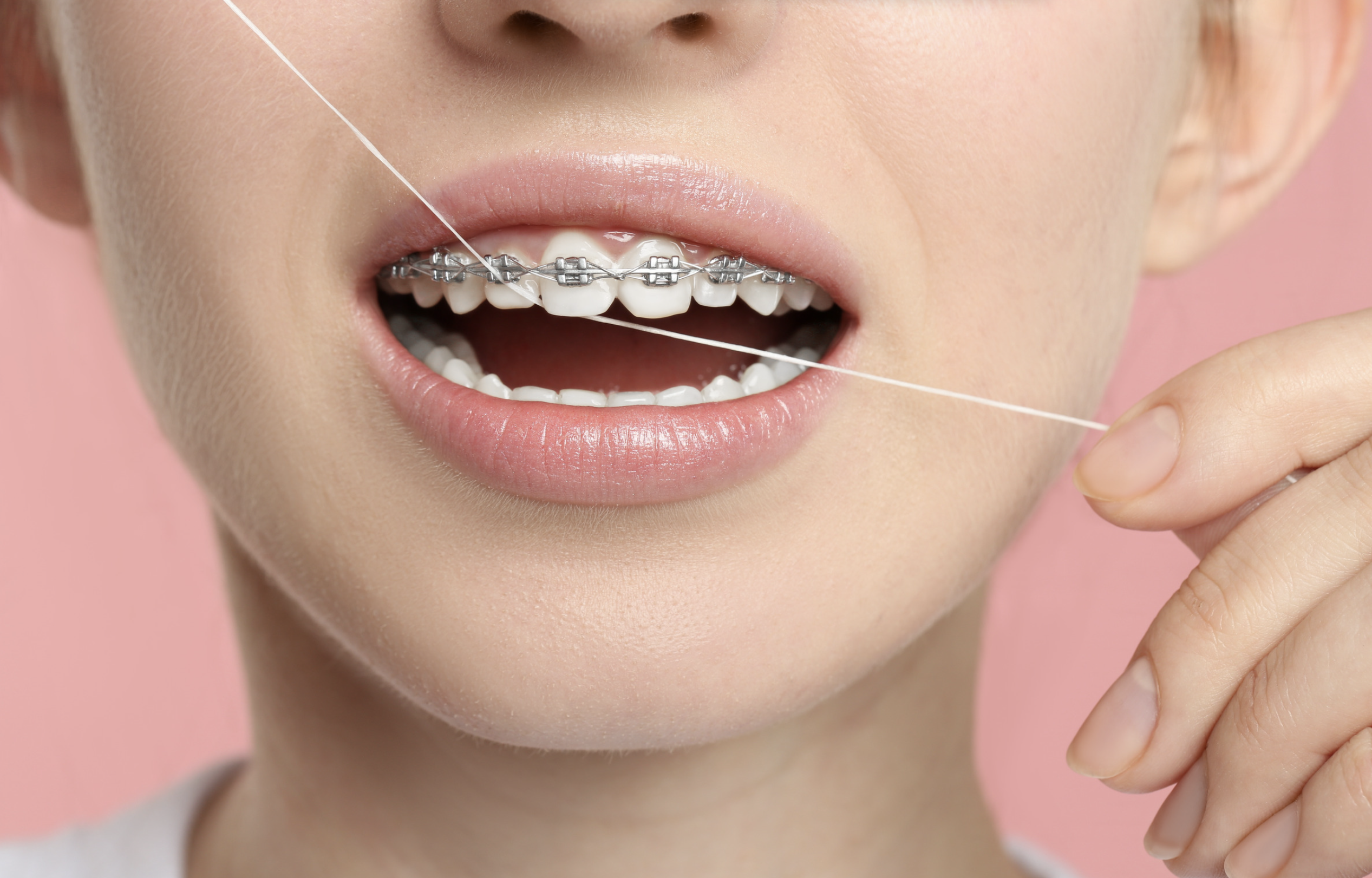
Flossing with braces is necessary, but understandably much more complicated. The wire running across your teeth blocks standard floss from sliding down into the gaps normally, and food debris accumulates around brackets in ways that brushing alone cannot address.
Leaving it there leads to white spot lesions, an early-stage decay that shows up as permanent chalky marks on the teeth after braces come off.
Standard floss picks are not designed for braces and typically cannot thread under the archwire. However, there are many supplementary tools and traditional floss alternatives designed for braces:
- Orthodontic floss threaders: A stiff plastic loop that lets you thread regular floss under the wire so you can clean each tooth individually.
- Superfloss: A pre-cut strand with a stiff threader end, a spongy middle section for cleaning around brackets, and a regular floss end. One product does most of the job.
- Orthodontic floss picks: Specially designed with a narrow, angled head that fits more easily under archwires. More convenient than a threader for daily use.
- Water flosser (oral irrigator): Uses a pressurized stream of water to flush debris from around brackets and below the gumline. Not a full substitute for mechanical flossing, but a good alternative, particularly for patients who find threading difficult.
If you are currently using Invisalign or other clear aligners, standard floss picks work fine. You remove the aligners before flossing, so there is no wire to navigate.
Dental Floss Picks vs. String Floss: Which Is Better?
Floss picks and string floss are different, but the best floss is the one you will use every day.
| Factor | Floss Picks | String Floss |
|---|---|---|
| Ease of use | Easier: single hand, no finger wrapping | More dexterity required |
| Back teeth access | Better reach for most people | Harder to maneuver at the back |
| Plaque removal | Effective when used with correct C-shape technique | Marginally more surface contact due to longer working length |
| Braces compatibility | Standard picks not suitable; orthodontic picks available | Works with threader; more thorough around brackets |
| Environmental impact | Single-use plastic, higher waste | Lower plastic per use |
| Best for | Daily convenience, limited dexterity, habit building | Maximum coverage, budget-conscious, less plastic |
Does Dental Floss Expire?
Technically, unflavored, unwaxed floss does not expire. The material itself does not degrade in a way that makes it unsafe or ineffective. Most manufacturers print a use-by date of around three to five years on packaging, primarily because flavoring and wax coatings can deteriorate over time, making the floss more prone to shredding or losing its glide.
If your picks are several years old, stored in a damp bathroom cabinet, or the floss has started to fray straight out of the pack, replace them. Frayed floss does not clean effectively and can snag on restorations.
Why Regular Flossing Matters for Long-Term Dental Health
Gum disease starts between the teeth, exactly where a toothbrush cannot reach. Bacteria in plaque at the gumline produces toxins that irritate the gum tissue, causing inflammation (called gingivitis).
Left untreated, that inflammation deepens into the supporting structures (periodontitis), causing bone loss, tooth loosening, and eventual tooth loss.
Daily flossing disrupts that bacterial buildup before it has the chance to calcify into tartar, which only a professional cleaning can remove. Two minutes of flossing per day is significantly cheaper than a course of periodontal treatment.
This also applies directly to patients considering cosmetic work. If you are thinking about getting veneers in Thailand, your gums need to be healthy before any cosmetic work goes ahead. Placing veneers on inflamed gum tissue leads to unpredictable margins, poor aesthetics, and accelerated wear.
At SmileBox, our dentist in Bangkok will assess your gum health before recommending any cosmetic treatment. Flossing consistently before your consultation puts you in a stronger position for a smooth process.
SmileBox Dental Clinic is led by Dr. Vishesh Bhatia and Dr. Vikram Bhatia, with a full team of specialists across general dentistry, periodontics, and cosmetic treatment. Book a check-up or cosmetic consultation today at any one of our Bangkok locations (Thonglor and Riverside).
Contact SmileBox Dental Clinic
Phone : (+66)2-402-9542
WhatsApp : (+66)63-352-3691
Email : [email protected]



References
- Home Use of Interdental Cleaning Devices, in Addition to Toothbrushing, for Preventing and Controlling Periodontal Diseases and Dental Caries. Retrieved 10 June, 2026, from https://www.cochranelibrary.com/cdsr/doi/10.1002/14651858.CD012018.pub2/full
- Comparing the Effectiveness of Water Flosser and Dental Floss in Plaque Reduction Among Adults: A Systematic Review. Retrieved 10 June, 2026, from https://pmc.ncbi.nlm.nih.gov/articles/PMC10906797
Frequently Asked Questions About Flossing How to Use Dental Floss
The correct flossing technique guides the floss gently below the gumline using a C-shaped motion against each tooth, then scraping upward to remove plaque. For string floss, use a fresh section for each gap. For picks, rinse between teeth and replace the pick when the strand becomes frayed. The key step most people miss is going below the gumline. Surface-only flossing removes food but does little against the bacteria that cause gum disease.
Standard floss picks cannot thread under the archwire, making them ineffective with traditional braces. Use orthodontic floss threaders, Superfloss, or orthodontic-specific picks that are designed to navigate under the wires. A water flosser (oral irrigator) is also a strong addition to flush debris from around brackets. If you are in Invisalign treatment rather than fixed braces, standard picks work fine. Remove your aligners before flossing as usual.
Most dental floss is made from either nylon (a multifilament material that cleans well but can shred in tight contacts) or PTFE (polytetrafluoroethylene), a single-filament material that glides more easily and is less prone to fraying. Many floss picks use PTFE for its smoother action. Some flosses are coated in wax to help them slide between tight teeth, and most are flavored with mint, which does not affect cleaning but makes the habit more pleasant.
Floss does not expire, but wax coatings and mint flavoring do deteriorate over time, typically within three to five years of manufacture. Old floss is more likely to fray or snap, which makes it less effective and potentially damaging to restorations. If your picks are old and the strand starts fraying straight out of the pack, replace them.
Each pick is designed for single use. Reusing a pick means using a frayed strand contaminated with bacteria from your last session, which is neither hygienic nor effective. Replace your pick after each flossing session. If you are mid-session and the strand becomes visibly frayed before you have finished, switch to a fresh pick rather than continuing with a worn one.