How Dentists Treat a Periodontal Abscess
Key Takeaways
- A periodontal abscess is a pocket of pus in the gum around a tooth, different from a tooth (periapical) abscess that starts inside the nerve.
- Periodontal abscess treatment starts with draining the pus and deep-cleaning the root, not with antibiotics.
- Antibiotics are added only for fever, spreading swelling, or a high-risk condition like uncontrolled diabetes, and never instead of drainage.
- Trying to pop an abscess at home can push the infection deeper. It needs a dentist.
- Once the swelling settles, follow-up gum care is what keeps the abscess from coming back.
- If you have painful gum swelling, a dental clinic in Bangkok can assess and drain it promptly.
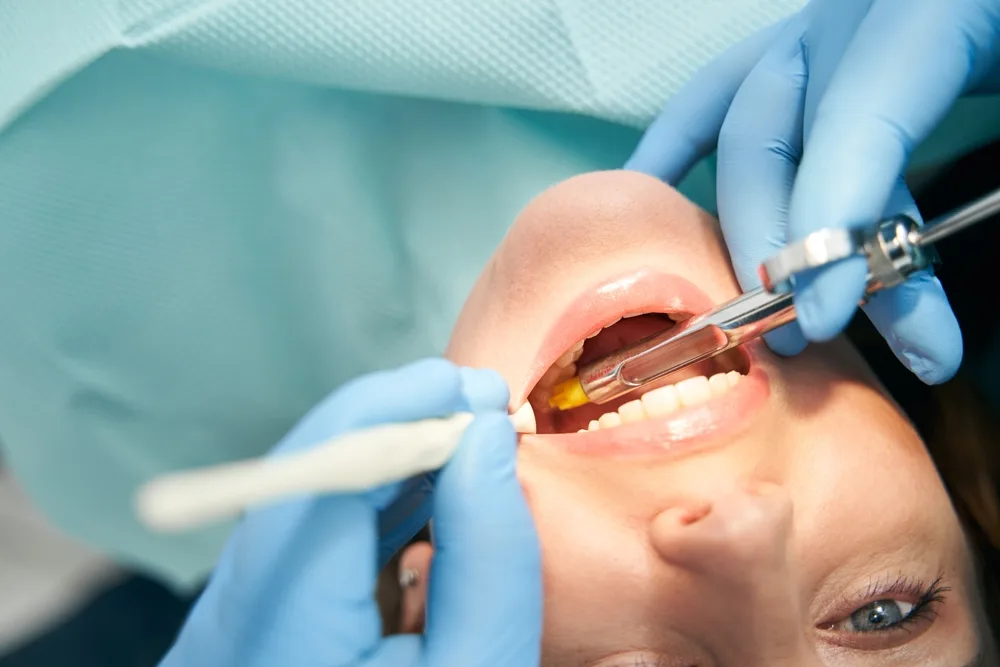
A periodontal abscess is a pocket of pus in the gum around a tooth, and it needs prompt dental care, not a home remedy. When caught early, it is usually straightforward to treat. If left alone, the infection can spread and put the tooth at risk, which is why knowing the signs and the treatment is important.
The Difference Between a Periodontal Abscess and a Tooth Abscess
The two are often mixed up because they look and feel similar, but they start in different places and need different treatment.
| Feature | Periodontal abscess | Periapical (tooth) abscess |
|---|---|---|
| Where it starts | In the gum pocket beside the tooth | Inside the tooth, from a dead or dying nerve |
| Usual cause | Gum disease, with trapped bacteria and debris | Untreated decay or a crack reaching the nerve |
| The tooth itself | Often still alive (vital) | Nerve is damaged or dead |
| Main treatment | Drainage and deep gum cleaning | Root canal or extraction |
Symptoms often overlap, so a dentist uses an X-ray and a vitality test to check whether the tooth's nerve still responds and to tell the two apart before starting treatment. A proper diagnosis then decides the correct care.
How Dentists Treat a Periodontal Abscess
How do you treat a periodontal abscess? The priority is to drain the trapped pus and clean the infected root surface. Antibiotics come into it only in certain cases rather than being the first move.
Drainage and Deep Cleaning Come First
Releasing the pus is the first step, either through the existing gum pocket or with a small incision in the gum. This relieves the pain and pressure quickly. After that, the dentist scales and root-planes the tooth root below the gumline to strip away the plaque and hardened calculus feeding the infection.
A tooth with severe bone loss or a poor long-term outlook may need to be removed if it cannot reasonably be saved. After treatment, warm salt water rinses and standard pain relief support recovery in the days that follow.
When Antibiotics Are Needed
Many cases that drain well need no antibiotics at all. They are added when the infection shows signs of reaching beyond the gum.
| Antibiotics are usually added when | Antibiotics are usually not needed when |
|---|---|
| There is fever or a general feeling of being unwell | The abscess drains well and symptoms stay local |
| Swelling is spreading beyond the gum | There are no signs of spreading infection |
| You have a high-risk condition such as uncontrolled diabetes | You are otherwise healthy |
| The abscess cannot be drained properly | Drainage and cleaning settle the problem |
Amoxicillin, sometimes combined with clavulanic acid, is a common first choice, with clindamycin an option if you are allergic to penicillin. Your dentist decides case by case.
Antibiotics alone, without drainage, will not clear a periodontal abscess, because the trapped pus stays where it is.

What Happens After the Swelling Goes Down
Draining the abscess handles the emergency, but it is only stage one. A periodontal abscess is usually a sign of underlying gum disease, which requires its own follow-up once the acute problem passes.
Dentists typically reassess pocket depth and gum attachment one to two weeks later, and may recommend a full round of scaling and root planing across other affected areas. Deep pockets that do not respond to non-surgical cleaning sometimes need minor gum surgery to reach and clean the root more thoroughly.
From there, ongoing maintenance through regular cleanings, good home care, and managing risk factors like smoking lowers the chance of another abscess.
Signs a Periodontal Abscess Is a Dental Emergency
See a dentist the same day rather than wait for a routine appointment if you experience:
- Fever, or a general feeling of being unwell, which can signal the infection is spreading
- Swelling that is visibly spreading across the face or jaw
- Difficulty swallowing or breathing, which needs emergency medical care right away
- Any periodontal abscess if you have uncontrolled diabetes or a weakened immune system
Do not try to pop or drain an abscess yourself. Squeezing one can push the infection deeper into the tissue instead of releasing it.
Why Choose SmileBox for Periodontal Abscess Care
Periodontal abscess treatment comes down to prompt drainage and deep cleaning first, with antibiotics only for fever, spreading swelling, or high-risk conditions, and never as a substitute for drainage.
When you are in pain, where you go matters as much as getting seen quickly. At SmileBox, a painful abscess is assessed and treated on-site, with the diagnosis confirmed before any treatment begins.
- Clear diagnosis first: We use an X-ray and a vitality test to confirm whether it is a periodontal or a tooth abscess, so the treatment fits the problem.
- On-site treatment: Drainage and deep cleaning (scaling and root planing) are handled in our clinic.
- Multilingual care: Communicate with our English-speaking team with ease. Describe your symptoms and follow aftercare clearly.
- Follow-up that helps prevent a repeat: We schedule the periodontal maintenance that treats the gum disease underneath, with drainage at the start of the plan.
Our clinic is led by Dr. Vishesh Bhatia and Dr. Vikram Bhatia, with two locations in Thonglor and Riverside. We treat periodontal abscesses on-site, then schedule the gum care that helps keep them from returning.
If you notice painful gum swelling, book an assessment at a dental clinic in Bangkok like SmileBox. Prompt drainage and cleaning by a professional help ease the pain and stop the infection from spreading further.
This article is for general information and does not replace a dental exam. Please have a dentist's assessment before treatment.
Contact SmileBox Dental Clinic
Phone : (+66)2-402-9542
WhatsApp : (+66)63-352-3691
Email : contact@smileboxclinic.com



References
- What's a Periodontal Abscess and How Do You Treat It?. Retrieved November 17, 2026, from https://my.clevelandclinic.org/health/diseases/24573-periodontal-abscess
- Periodontal Abscess (StatPearls). Retrieved November 17, 2026, from https://www.ncbi.nlm.nih.gov/books/NBK560625/
- Periapical Abscess: Symptoms, Diagnosis and Treatment. Retrieved November 17, 2026, from https://my.clevelandclinic.org/health/diseases/24896-periapical-abscess
- Periodontal Abscess: Incision and Drainage, Antibiotics. Retrieved November 17, 2026, from https://www.jcdr.net/article_fulltext.asp?id=1246
Frequently Asked Questions About Periodontal Abscess
No. The pain may ease for a while if the abscess drains a little on its own, but the source of the infection stays in the gum pocket. Without professional drainage and cleaning, it is likely to flare up again or spread. A periodontal abscess needs a dentist, even if it feels better for a day or two. Warm salt water rinses can ease discomfort in the meantime, but they do not treat the cause.
Not always. Many teeth can be saved when the abscess is drained and cleaned promptly and the underlying gum disease is treated afterward. Extraction is usually reserved for teeth with severe bone loss, heavy looseness, or a poor long-term outlook that cannot reasonably be saved. Seeking prompt treatment gives a better chance at keeping the tooth, so do not wait out the pain at home.
The sharp pain and pressure often ease within a day or two of drainage, and the gum settles over the following days. Your dentist usually reassesses after one to two weeks to check the pocket and plan any further gum cleaning. Full recovery depends on treating the gum disease underneath, which takes longer than clearing the abscess itself. Follow your dentist's aftercare and keep the follow-up appointment, since the abscess is only the first stage.
A dentist starts with an exam of the swollen area, checking how deep the gum pocket is and whether the tooth is loose. An X-ray shows bone loss around the root and helps rule out a tooth (periapical) abscess. A vitality test checks whether the tooth's nerve still responds, since a periodontal abscess usually leaves the nerve alive while a tooth abscess does not. Getting the diagnosis right is what decides whether you need gum treatment or root canal care.