What is Dental Scaling? A Step-by-Step Guide
Key Takeaways
- Dental scaling is the professional removal of plaque and tartar from tooth surfaces, including just below the gumline, where brushing cannot reach.
- How often you need scaling varies from person to person. Some patients are seen about every six months, while others need shorter or longer intervals depending on their gum health, how quickly tartar builds up and their individual risk factors.
- Routine scaling is usually well tolerated, mostly vibration and light pressure, while deeper treatment may use local anesthesia.
- Dental scaling and root planing is a deeper, non-surgical treatment for periodontitis. It may be recommended when a periodontal examination points to periodontitis, based on the overall diagnosis rather than pocket depth alone.
- Plaque, the sticky bacterial film on teeth, is the primary cause of gum disease. Tartar makes it worse because its rough surface traps more plaque and cannot be cleaned away at home.
- SmileBox Dental Clinic offers professional scaling as part of its general dentistry services, with digital imaging, VR-assisted comfort and transparent pricing at two Bangkok locations.

Even with diligent brushing and occasional flossing, nearly everyone develops tartar buildup, characterized by a stubborn yellowish crust along the gumline. What’s frustrating is that hardened plaque, known as tartar, is impossible to remove with brushing or flossing. Only a professional scaling dental treatment can.
So what is dental scaling, and what actually happens during the procedure? Whether you are due for a routine cleaning or your dentist has mentioned deeper treatment like dental scaling and root planing, understanding the process helps you walk into the chair feeling prepared rather than anxious.
Let’s break down dental scaling: its process, how it compares to deep cleaning, the expected pain level, cost, and recommended frequency.
What is dental scaling?
Dental scaling is the professional removal of plaque and calculus (hardened tartar) from tooth surfaces, including just below the gumline. Your dentist or hygienist uses ultrasonic instruments and hand tools called curettes to clean areas that daily brushing cannot reach.
This is not something that can be handled at home. Plaque begins to harden into tartar fairly quickly, often within a few days, though the exact timing differs from person to person. Once it hardens, it bonds with enamel, resulting in a rough area that draws in further bacterial growth. Dental plaque, the sticky bacterial film on your teeth, is the main cause of gum inflammation. Tartar makes the problem worse because its rough surface traps more plaque and cannot be cleaned away at home.
A standard "scale and polish" (also called prophylaxis) is what most patients receive at a routine checkup. It clears surface-level tartar and polishes the teeth to slow future plaque accumulation. Therapeutic scaling takes it a step further for patients already showing early signs of gum disease.
What is dental scaling and root planing?
Dental scaling and root planing is a deeper procedure sometimes called a "deep cleaning." It is the standard non-surgical treatment for periodontitis, the more advanced stage of gum disease.
The scaling portion removes tartar from deeper periodontal pockets, the small gaps that form between your teeth and gums when infection pushes the tissue away from the tooth root. Root planing then smooths the root surfaces so the gum tissue can respond and begin to heal.
Your dentist may recommend this treatment when a periodontal examination indicates periodontitis. That diagnosis draws on several findings together, such as deeper pockets, clinical attachment loss, bleeding on probing, tartar below the gumline and bone loss on X-rays. It rests on the overall periodontal picture rather than pocket depth alone. If untreated, those pockets deepen, more bone deteriorates, and teeth eventually become loose, so early detection is crucial.
What is the dental scaling procedure? (Step by step)
A dental scaling procedure might sound anxiety-inducing, but not when you know exactly what happens. Here is the typical process:
- Examination. Your dentist checks for gum inflammation, measures pocket depths with a small probe and may take X-rays when clinically indicated to assess bone levels.
- Anesthesia (if needed). For deeper scaling or sensitive patients, a local anesthetic numbs the area to keep you comfortable.
- Scaling. Ultrasonic scalers break up tartar with high-frequency vibrations while a water spray flushes debris away. Hand curettes then remove anything the ultrasonic tip missed, especially in tight spaces between roots.
- Root planing (if applicable). The dentist cleans and smooths the root surfaces to remove tartar and bacterial deposits below the gumline. This step is only needed for patients with periodontal pockets.
- Polishing. A rotating rubber cup and gritty paste polish the teeth, removing surface stains and creating a smoother finish that resists plaque buildup.
- Aftercare instructions. Your dentist will explain what to expect over the next few days and when to return. Routine cases wrap up in a single visit, while deep cleaning may be split across two to four appointments, depending on severity.
Is dental scaling painful?
Routine scaling is usually well tolerated. You will feel vibration from the ultrasonic scaler and some pressure from the hand instruments. How much you feel depends on how inflamed your gums are, how much tartar there is, and your own sensitivity, so tell your dentist if anything feels sharp.
Deep scaling and root planing can involve more sensitivity, which is why local anesthesia is used to help keep you comfortable. Your gums might be tender for a few days afterward, and some people experience mild soreness or temporary tooth sensitivity to hot and cold. The symptoms usually clear up in about a week.
At SmileBox Dental Clinic, patients can wear VR headsets during scaling. Focusing on immersive visuals instead of the sounds and sensations of cleaning may help some patients feel more relaxed. Research on VR distraction is more established in children, though it may still be a useful comfort option for adults when dental anxiety has kept them away from regular checkups.
When do you need scaling vs. scaling and root planing?
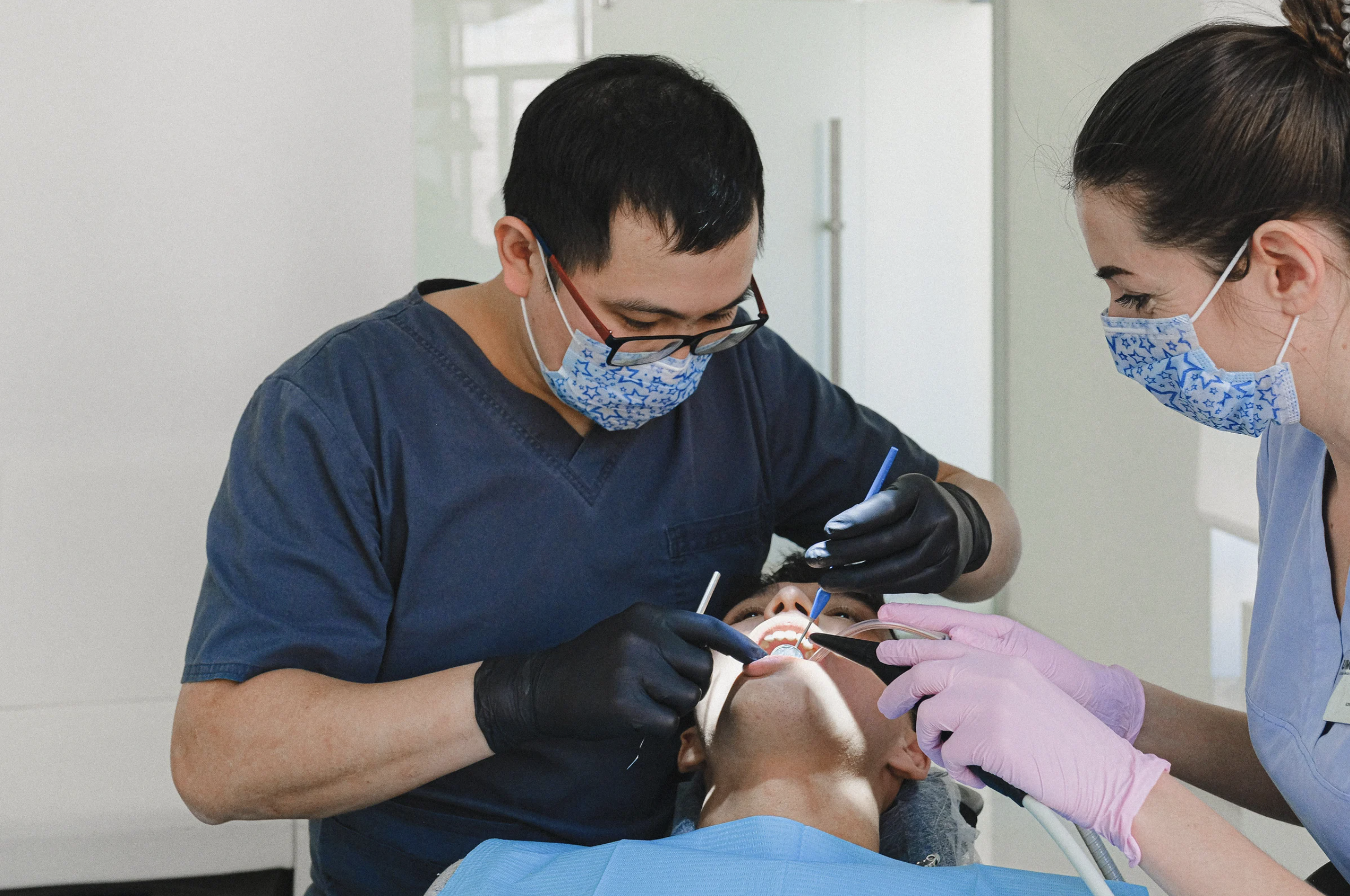
Not every patient needs deep cleaning. Your dentist determines which level of treatment you need based on a clinical examination and imaging.
- Routine scaling is enough when: your gums are generally healthy, tartar is limited to the visible tooth surfaces and there are no signs of periodontitis. That describes most patients who attend regular checkups.
- Scaling and root planing may be recommended when a periodontal examination indicates periodontitis, particularly when deeper periodontal pockets, clinical attachment loss, bleeding on probing, subgingival tartar or supporting bone loss are present. Treatment decisions rest on the overall periodontal diagnosis rather than pocket depth alone.
Your general dentistry team diagnoses the severity and recommends the right level of care. The goal is always to treat gum disease before it progresses to the point of tooth loss.
How often should you get dental scaling?
There is no single interval that suits everyone. The right frequency of professional cleaning varies between individuals. Some patients benefit from a cleaning roughly every six months, while others need shorter or longer intervals depending on their gum health, how quickly plaque and tartar build up, their oral hygiene and their individual risk factors. Your dentist will set a schedule that fits your mouth.
Patients who have completed periodontal treatment often need supportive care at shorter intervals, frequently around every three to four months at first, with the schedule adjusted according to gum stability and risk. People who build tartar quickly, smokers and patients managing conditions such as diabetes may also be seen more often.
Consistent professional scaling is one of the simplest ways to prevent gingivitis from progressing into periodontitis. Bone and gum attachment lost to periodontitis generally do not return on their own after routine cleaning alone. In selected cases, a periodontist may be able to achieve some bone and attachment gain through regenerative procedures. Even so, prevention is far easier and less costly than treatment.
Why choose SmileBox Dental Clinic for scaling and general dentistry
Here at SmileBox Dental Clinic, our general dentistry team handles everything from routine six-month scaling to advanced periodontal treatment. Before treatment, your dentist assesses your gum health through a clinical examination, which may include periodontal probing. Dental X-rays may be recommended when clinically indicated to check supporting bone levels or other conditions that cannot be fully assessed by examination alone. In selected cases where three-dimensional information is clinically necessary, CBCT imaging may be used for diagnosis or treatment planning.
We offer VR headsets during dental procedures to help patients who tense up in the chair. Our clinic is SHA Plus+ certified with strict sterilization protocols, and we keep pricing fully transparent with no hidden fees.
Our team speaks English, Thai, Japanese, Arabic, Mandarin and Hindi, so language is never a barrier. We have two Bangkok locations, Thonglor (Sukhumvit) and Riverside (Ratchapruek), and we offer virtual consultations for patients planning treatment from overseas.
Keep your gums healthy with professional scaling
Dental scaling removes the plaque and tartar that brushing cannot, helping prevent gum disease before it progresses into something more serious. Whether you need a standard scale and polish or a deeper scaling and root planing treatment, catching gum problems early saves time, money and teeth.
Book your scaling appointment at SmileBox Dental Clinic, your trusted dental clinic in Bangkok for complete general dentistry care. We combine experienced general dentistry specialists, clinically guided diagnosis and VR-assisted comfort with fully transparent pricing for a pleasant visit every time.
Contact SmileBox Dental Clinic
Phone : (+66)2-402-9542
WhatsApp : (+66)63-352-3691
Email : [email protected]



References
- Periodontal (Gum) Disease. Retrieved 19 June 2026, from https://www.nidcr.nih.gov/health-info/gum-disease
- Scaling and Root Planing. Retrieved 19 June 2026, from https://my.clevelandclinic.org/health/treatments/22740-scaling-and-root-planing
- Dental Plaque. Retrieved 19 June 2026, from https://www.healthline.com/health/dental-and-oral-health/plaque
Frequently Asked Questions About Dental Scaling
Dental scaling is a professional cleaning that removes plaque and hardened tartar from your teeth and just below the gumline. You need it because tartar cannot be removed by brushing or flossing at home. When tartar builds up, it traps more plaque and irritates the gums, which can lead to gingivitis and, if left untreated, periodontitis and eventual tooth loss. How often you need scaling varies, so your dentist will recommend a schedule based on your gum health and individual risk rather than a fixed six-month rule.
Dental scaling and root planing is a two-part deep cleaning procedure used to treat periodontitis. Scaling removes tartar from deeper periodontal pockets below the gumline, while root planing smooths the tooth root surfaces to control bacteria and help the gums respond. It is usually recommended when a periodontal examination indicates periodontitis, based on findings such as deeper pockets, clinical attachment loss, bleeding on probing and bone loss together, rather than pocket depth alone. It may require local anesthesia and can be completed across two to four appointments.
Routine dental scaling is usually well tolerated, mostly vibration and light pressure from the instruments. How much you feel depends on how inflamed your gums are, how much tartar is present and your own sensitivity. Deep scaling and root planing may involve local anesthesia to help keep you comfortable. Mild soreness, gum tenderness and temporary sensitivity are normal for a few days after treatment. At SmileBox Dental Clinic Bangkok, patients can use VR headsets during the procedure, which may help reduce anxiety for some people.
The dental scaling procedure begins with an examination where your dentist checks gum health, measures pocket depths and may take X-rays when clinically indicated. Local anesthesia is applied if needed. Ultrasonic scalers and hand curettes then remove tartar from all tooth surfaces including below the gumline. If root planing is needed, the root surfaces are cleaned and smoothed. The teeth are polished and aftercare instructions are provided. Routine cases finish in one visit.