Types of Endodontic Surgery and When They Are Used
Key Takeaways
- Endodontic surgery treats infection at the root tip or around a tooth when a standard root canal cannot clear the problem on its own.
- The main procedures are apicoectomy (root-end surgery), hemisection, root amputation, intentional replantation, and incision and drainage.
- Most procedures are done under local anesthetic in under an hour, with mild swelling for two to three days and bone healing over several months.
- A tooth with a severe vertical fracture, advanced bone loss, or extensive structural breakdown usually cannot be saved by root-end surgery.
- When a tooth cannot be kept, an implant is the common next step, restoring bite function without relying on a compromised root.
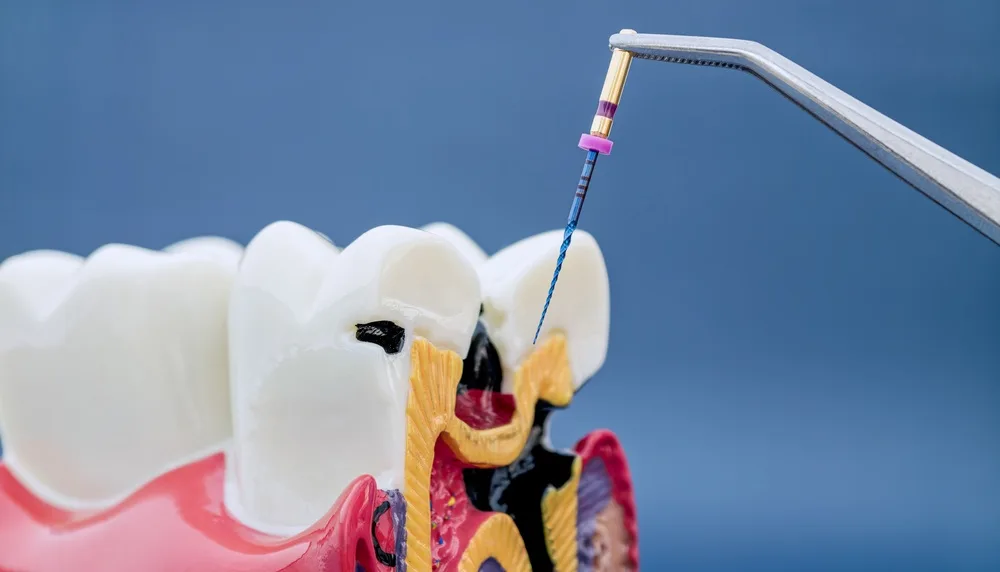
A root canal saves most infected teeth. However, when infection lingers at the root tip or an earlier treatment fails, surgery becomes the next step to keep the tooth in place. The sections below cover the main types of endodontic surgery, when each one is used, and how to tell whether a tooth can still be saved or has reached the point where extraction and an implant are the more realistic path.
What Is Endodontic Surgery?
Endodontic surgery treats infection or damage in the tissue and bone around the root tip, rather than working from inside the crown as a conventional root canal does. The surgeon approaches the tooth from outside, usually through a small flap in the gum, to reach the area where the problem actually sits.
It is used when a standard root canal cannot clear recurring symptoms, or when complex root anatomy blocks conventional retreatment through the crown. The goal is to remove the infection, seal the root tip, and save the natural tooth before extraction becomes the only remaining option.
The Main Types of Endodontic Surgery and Their Applications
Each procedure is matched to a specific problem, and the right one depends on the tooth, the location of the infection, and how much natural structure is still sound:
- Apicoectomy (root-end surgery): The most common procedure. The surgeon removes the infected root tip and seals the end with a small filling. Used for persistent infection after a root canal, often when retreatment through the crown is not possible.
- Hemisection: Divides a multi-root molar in two, so the surgeon can remove one damaged root along with its portion of the crown, keeping the healthy, root-canal-treated section in place.
- Root amputation: Removes a single compromised root while leaving the crown intact. A fit for isolated fractures or localized bone loss around one root of a multi-root tooth.
- Intentional replantation: The tooth is carefully extracted, repaired outside the mouth, then placed back into its socket. Reserved for cases where surgical access from the side of the jaw is limited.
- Incision and drainage: Drains an acute, painful abscess to control the infection and bring down swelling before any further endodontic work is attempted.
What to Expect During and After Surgery
The procedure itself is shorter and less dramatic than most patients expect, and the follow-up is spread over months rather than weeks:
- During the procedure: Done under local anesthetic and usually finished within an hour. You stay awake and comfortable throughout, and sedation options are available for anxious patients.
- The first week: Mild swelling for two to three days is normal, and a short course of pain relief covers it, with an antibiotic added when infection is suspected. Stitches come out in about a week, and most patients return to normal eating within a day or two, chewing on the opposite side while the area heals.
- The months after: Bone healing around the root tip continues quietly over several months. A follow-up X-ray at around six months, and sometimes again at a year, confirms that the area is filling in properly before the case is closed.
When a Tooth Cannot Be Saved
Root-end surgery has limits. The cases that usually fall outside what it can repair include:
- A severe vertical fracture running down the root.
- Advanced bone loss from long-term periodontal disease.
- Extensive breakdown of the crown and root structure that leaves too little healthy tooth to work with.
Attempting surgery in those cases usually delays the inevitable rather than preventing it. The honest path is then extraction, followed by a replacement that restores bite function without relying on a compromised root. An implant is the most common option here, because it anchors into the jaw itself rather than leaning on neighboring teeth, and your dentist walks through both routes and what each means for cost and timeline before any decision is made.

Why Patients Choose SmileBox for Endodontic and Implant Care
Deciding whether to save a tooth or replace it is an important choice, and it helps to be seen somewhere that handles both options. SmileBox treats root canal, endodontic surgery and implant patients at the same clinic at its Thonglor and Riverside locations, so the recommendation reflects what your case actually needs.
Every case starts with a 3D CBCT scan that shows root anatomy, bone level and any fracture lines in detail, which is often what settles the question. Dr. Vishesh Bhatia and Dr. Vikram Bhatia then talk through the findings and the realistic paths, including how an implant would fit if the tooth cannot be kept. The implant systems used at SmileBox come from manufacturers in Switzerland, South Korea and the United States, including Straumann, Neodent, MegaGen, Neobiotech, Osstem and Zimmer, each with long clinical track records. The right system for your case depends on bone condition, bite and the long-term plan for your mouth, rather than being picked by default.
Book a consultation at SmileBox to find out whether endodontic surgery or a dental implant in Bangkok is the better option for your case.
Contact SmileBox Dental Clinic
Phone : (+66)2-402-9542
WhatsApp : (+66)63-352-3691
Email : contact@smileboxclinic.com



References
- Endodontic Surgery. Retrieved 17 November 2026, from https://www.aae.org/patients/dental-symptoms/endodontic-surgery/
- Endodontic Microsurgery. Retrieved 17 November 2026, from https://www.uthscsa.edu/patient-care/dental/services/apicoectomy
Frequently Asked Questions About Types of Endodontic Surgery
The five most common are apicoectomy, hemisection, root amputation, intentional replantation, and incision and drainage. Apicoectomy handles persistent infection at the root tip after a standard root canal. Hemisection and root amputation deal with multi-root molars where only part of the tooth is damaged. Intentional replantation is used when surgical access from the side is blocked. Incision and drainage is a first step for an acute abscess, usually followed by other endodontic work.
The procedure itself is done under local anesthetic, so the area is numb throughout. Most patients describe the few days afterwards as mild soreness and swelling rather than sharp pain, and a short course of pain relief covers it. Severe pain is uncommon and should be checked by your dentist in case of infection or a healing issue.
Visible swelling usually settles within two to three days, stitches come out in about a week, and most patients return to normal eating within a day or two. Bone healing at the root tip continues more slowly and is confirmed by a follow-up X-ray at around six months, and sometimes again at a year.
When the tooth has a severe vertical fracture, advanced bone loss, or extensive breakdown that root-end surgery cannot repair. In those cases, surgery often only delays extraction. An implant anchors into the jaw itself and restores bite function without relying on a compromised root, which tends to be the more durable long-term result.