Why Are My Teeth Sensitive? Causes and Relief
Key Takeaways
- Tooth sensitivity occurs when the protective layers of a tooth wear down, exposing the inner dentin and the nerve endings beneath it.
- Teeth sensitive to cold drinks, sweet foods, or even cold air are often the first signs that something needs attention.
- The underlying cause can range from worn enamel and gum recession to decay, grinding, or recent dental work.
- Most cases are manageable once the cause is identified, but proper diagnosis is what separates temporary relief from lasting recovery.
- Sensitivity that lasts for weeks or brings sharp pain when biting can point to deeper issues such as decay, a crack, or pulp involvement, and should be reviewed by a dentist.

Most people have felt it at some point. A sip of cold water, the first bite of ice cream, or a breath of winter air can bring on a sharp jolt that catches you off guard. Tooth sensitivity is one of the most common dental complaints, and the path to lasting relief usually starts with understanding what is actually causing it.
Why Are My Teeth Sensitive? The Common Causes
Most tooth sensitivity, clinically called dentin hypersensitivity, happens when the protective layers of a tooth wear down, leaving the inner dentin exposed. Dentin sits underneath the harder outer enamel and contains thousands of microscopic, fluid-filled tubules that connect to the nerve-rich pulp at the center of the tooth. When dentin is exposed, cold, heat, sweet foods, or touch shift that fluid inside the tubules, and the movement triggers the nerve endings, producing that familiar short, sharp jolt. Teeth sensitive to cold drinks can be an early sign that a tooth needs attention.
Several factors can cause sensitivity to develop:
- Worn enamel from years of brushing or acidic foods, which gradually thins the outer protective layer.
- Gum recession exposing the tooth roots, which have no enamel coating to shield them.
- Tooth decay or a cracked or chipped tooth, which creates a direct path to the nerve.
- Grinding the teeth at night, known as bruxism, which wears or chips the enamel over time.
- Brushing too hard with a hard-bristled toothbrush, which can wear enamel at the gum line and contribute to gum recession.
- Acidic foods and drinks such as soda, citrus, and wine, which weaken enamel after every exposure.
- Recent dental work such as whitening, fillings, or a deep cleaning, which can trigger short-term sensitivity.
Each cause calls for a slightly different fix, which is why one universal solution rarely works for everyone.
How to Stop Sensitive Teeth Pain Immediately
For quick relief, the aim is to block the pain signal and avoid making things worse while the tooth recovers. Knowing how to stop sensitive teeth pain immediately can make a real difference between an uncomfortable week and a manageable one.
A few things worth trying at home:
- Switch to a toothpaste for sensitive teeth. These work best with steady twice-daily use over a couple of weeks rather than instantly on contact, so start sooner rather than later.
- Avoid very hot or very cold foods and drinks until the discomfort settles. Drinking through a straw also limits how much contact a cold drink has with the teeth.
- Use a soft-bristled toothbrush and brush gently rather than scrubbing.
- If the gums around the tooth feel sore, a warm salt water rinse can soothe them, although it will not fix the sensitivity itself.
- Pause whitening products, strips, or pens until the teeth feel normal again, since the peroxide in most whiteners can make sensitivity worse.
If sensitivity continues despite these steps, gets worse, or settles in one particular tooth, book a dental exam so your dentist can identify or rule out causes such as exposed roots, decay, a crack, or an inflamed nerve.
What Is the Best Toothpaste and Toothbrush for Sensitive Teeth?
The right products make daily care much easier on sensitive teeth, and the choice often matters more than people expect.
A good toothpaste for sensitive teeth relies on a handful of proven active ingredients:
- Potassium nitrate, which calms the nerve over time so it becomes less reactive to triggers.
- Stannous fluoride, arginine, or calcium sodium phosphosilicate, which block the exposed tubules so heat and cold cannot set off the nerve in the first place.
Any of these can work well, but results build gradually rather than instantly. Two to four weeks of steady twice-daily use gives the clearest sense of whether a product is working.
The brush matters just as much as the paste:
- A soft-bristled toothbrush, used in gentle circular motions, cleans effectively without wearing down enamel or pushing the gums back further.
- Hard or medium bristles combined with a sawing motion are one of the main reasons enamel and gum tissue suffer in the first place.
- An electric toothbrush with a built-in pressure sensor is a useful upgrade for anyone who tends to scrub too hard without realizing.
Brushing for two minutes twice a day, holding the brush at a slight angle to the gum line rather than flat against the teeth, is the cleanest and gentlest technique.
How to Care for Sensitive Teeth Long Term
Beyond the immediate steps, long-term care keeps sensitivity from coming back. A few habits make the biggest difference:
- Keep up with twice-yearly dental check-ups and professional cleanings, which catch problems like recession or enamel wear before they become painful.
- Ask about in-clinic fluoride treatment. Fluoride varnish applied to sensitive areas may help strengthen susceptible surfaces and reduce sensitivity, and it is a common next step when toothpaste alone is not enough.
- When acidic foods or drinks are part of the day, rinse with water afterwards and wait at least half an hour before brushing, since the enamel is temporarily softened.
- If grinding or clenching is driving the sensitivity, a well-fitted night guard can help prevent further wear. Custom-made guards generally fit more precisely than over-the-counter versions.
Small habits add up, and many patients who follow a steady routine notice the difference within a few weeks. The protective effect continues to build over months as the exposed tubules seal over and the nerve becomes less reactive. Enamel that has worn away and gums that have receded do not grow back, which is why protecting what remains matters.
When to See a Dentist About Sensitive Teeth
Most sensitivity is manageable at home, but some signs point to something that needs a clinical fix rather than a new toothpaste. Book an appointment if:
- Sensitivity does not ease with a toothpaste for sensitive teeth after two to four weeks of consistent use.
- There is sharp pain when biting or chewing on a specific tooth, which can signal a hairline crack.
- A single tooth becomes visibly damaged, darker than its neighbors, or swollen at the gum line.
- The pain is severe, lasting, or wakes you up at night, which may indicate the nerve is involved.
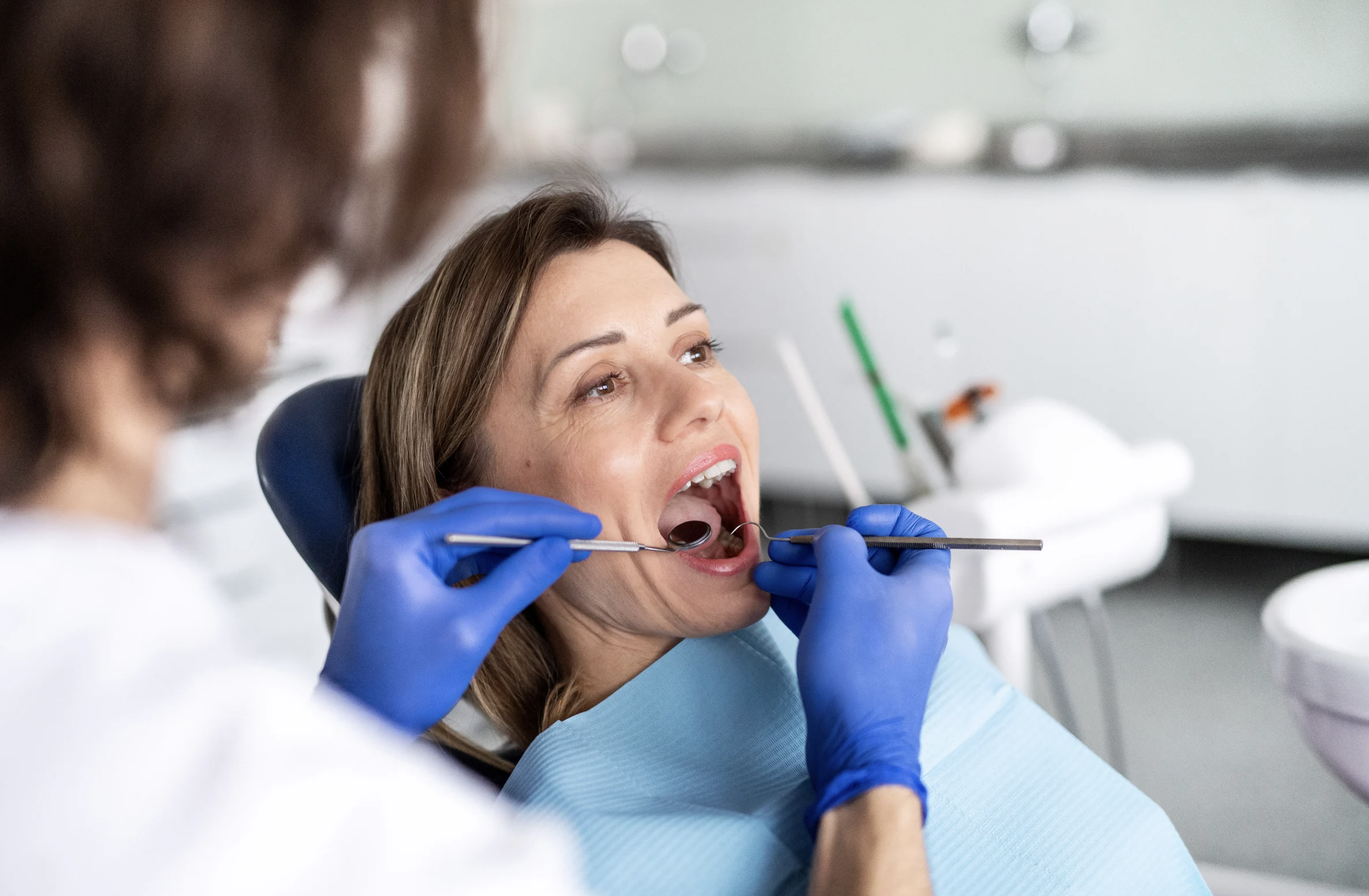
These symptoms often point to deeper issues such as decay reaching the pulp, a fractured tooth, or an abscess. Exposed roots can also contribute to sensitivity, but are typically managed with desensitizing products or in-clinic fluoride first. A dental exam usually starts with a visual check, a cold test and a gentle tap or bite test on each suspect tooth, and an X-ray when needed to check for decay, bone changes, or an abscess. Some cracks do not show on X-rays, which is why the clinical tests matter. Once the cause is clear, the right treatment can range from a fluoride application to a filling, a crown, or root canal treatment in cases where the pulp cannot recover.
Getting to the Root of Sensitive Teeth
Sensitivity that sticks around is rarely about toothpaste alone. At SmileBox, our team starts by identifying the real cause, then tailors the treatment to address it. That might be a fluoride application, a fitted night guard, or restoring worn enamel before it grows into something bigger.
With transparent pricing, a multilingual team, and two easy-to-reach Bangkok clinics in Thonglor and Riverside, we look after both local and overseas patients. For anyone searching for a trusted dentist in Thailand from abroad, virtual consultations make it simple to plan ahead.
Tired of dealing with sensitive teeth? Book a check-up at SmileBox today and let our team help you smile without the sting.
Contact SmileBox Dental Clinic
Phone : (+66)2-402-9542
WhatsApp : (+66)63-352-3691
Email : [email protected]



References
- Sensitive teeth: What treatments are available?. Retrieved 22 June 2026, from https://www.mayoclinic.org/healthy-lifestyle/adult-health/expert-answers/sensitive-teeth/faq-20057854
- Sensitive Teeth. Retrieved 22 June 2026, from https://my.clevelandclinic.org/health/symptoms/10954-teeth-sensitivity
Frequently Asked Questions About Sensitive Teeth
Sudden sensitivity usually points to a recent trigger such as a new crack from biting something hard, gum recession from aggressive brushing, or fresh enamel wear from acidic foods. It can also follow a dental procedure such as whitening or a deep cleaning, in which case it tends to settle within a week or two. If the sharp feeling stays in one tooth, it is worth booking a check-up to rule out a crack or early decay.
Mild sensitivity from a temporary trigger, such as whitening or a new toothpaste, typically settles within a few days to two weeks. Sensitivity caused by gum recession or enamel wear can improve over four to six weeks with the right products and brushing technique. Anything lasting longer, or pain that gets sharper rather than better, usually means the underlying cause needs a clinical fix.
It depends on the cause. Sensitivity following whitening, a deep cleaning, or a new filling often eases on its own within a week or two as the tooth settles. Sensitivity caused by enamel wear or gum recession will not fully heal on its own, since neither can grow back, but the right toothpaste and brushing technique stop it from getting worse. The right fix for decay or a crack depends on severity, since not every case needs invasive treatment. Exposed roots can often be managed with desensitizing toothpaste, gentle brushing, and in-clinic fluoride, while persistent cases may benefit from a bonding agent or, in selected cases, a gum graft.
Most sensitive teeth never reach that point. The exception is when the cause is deep decay, a crack, or trauma that lets bacteria reach the pulp. In those cases, the pain often changes: it lingers after the trigger is gone, starts on its own, or becomes a constant throbbing ache. If that happens, or if you notice swelling or pain when biting, see a dentist. Root canal treatment is considered only when the pulp cannot recover.