Root Canal Treatment Steps and What to Expect
Key Takeaways
- Root canal treatment removes infected or damaged pulp from inside a tooth, allowing the natural tooth to be preserved rather than extracted.
- A diagnosis combines your symptoms, a clinical examination, pulp tests, and dental X-rays rather than any single sign on its own, and some infections are only picked up on a routine X-ray.
- The procedure is typically completed in one or two visits and, with local anesthetic, most patients find it no more uncomfortable than a deep filling.
- Mild soreness or sensitivity for three to five days is normal; severe pain or worsening swelling should be reviewed promptly by your dentist.
- Saving the natural tooth is generally the preferred option, but extraction followed by a dental implant becomes the appropriate choice when the tooth is too damaged to restore.
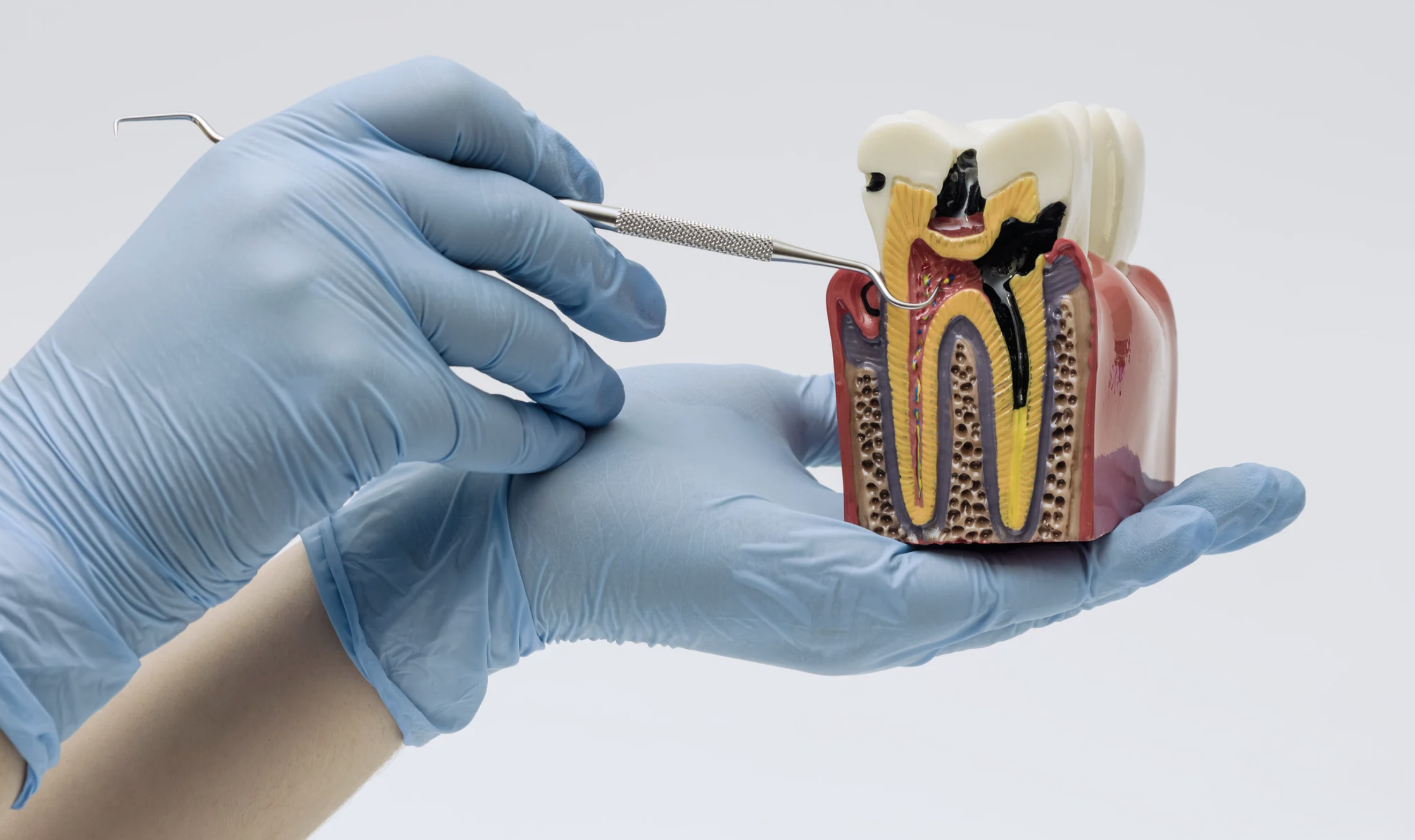
Root canal treatment is a dental procedure that causes a lot of unnecessary worry for many people. In reality, contemporary methods have transformed it into a common procedure, unlike the complex operation many still believe it to be. To save a tooth that is infected or severely damaged, this is frequently the sole viable option. Knowing the procedure’s details, expenses, and recovery process simplifies the decision.
What Is Root Canal Treatment and Why Do You Need It?
Root canal treatment is a procedure that removes infected or damaged pulp from inside a tooth. The pulp is the soft tissue running from the crown down through each root, containing nerves and blood vessels that supplied the tooth while it was developing. Once a tooth is fully grown, it can function normally without its pulp, which is why removing it does not mean losing the tooth itself.
Pulp usually gets infected due to a deep cavity reaching the nerve, a cracked or chipped tooth, injury, or multiple dental procedures on the same tooth. Signs of trouble are a continuous toothache, lingering sharp pain from hot or cold stimuli, swollen gums, or a tooth that becomes discolored compared to adjacent ones. Certain infections are asymptomatic, and the first sign is often a subtle finding on a routine dental X-ray that prompts a full clinical examination to confirm the diagnosis.
Root Canal Treatment Steps Explained
This procedure usually involves three stages. It’s easier for most patients than they anticipated.
Phase 1: Diagnosis and preparation
- Your dentist confirms the diagnosis by combining your symptoms, a clinical examination, pulp tests such as a cold test, and an X-ray. The X-rays help assess the roots, the surrounding bone, and the likely canal anatomy; front teeth usually have one canal and back molars often have three or four, though variation is common.
- Local anesthetic numbs the area, so the remainder of the visit feels similar to a routine filling.
- A thin rubber sheet, known as a dam, is fitted around the tooth to keep saliva and bacteria out of the working area.
Phase 2: Cleaning the canals
- The dentist creates a small opening through the crown to access the pulp chamber.
- The infected pulp is removed and the canals running down each root are carefully shaped and cleaned with very fine files.
- An antibacterial rinse flushes out any remaining debris.
- In selected cases, an intracanal medicament may be placed between appointments to help reduce residual microbial activity, with the canals filled at a follow-up visit one to two weeks later once the tooth has settled.
Phase 3: Sealing and protecting the tooth
- The cleaned canals are filled with a rubbery, biocompatible material called gutta percha, which seals the space and prevents bacteria from returning.
- A temporary filling closes the opening on top.
- The tooth then needs a definitive restoration to seal out bacteria, protect it from fracture, and restore normal function. Not every tooth needs a crown; it depends on where the tooth is and how much natural structure is left. Back teeth (molars) take the brunt of heavy chewing, so they usually need extra protection, like an onlay or a crown. Front teeth handle less force and can often be safely restored with just a tooth-colored bonded filling. Your dentist will recommend the option that best protects your tooth.
Most cases are completed in one or two appointments, depending on which tooth is involved and the complexity of the infection.
The Side Effects of Root Canal Treatment
Some mild root canal treatment side effects are normal during the first few days. Patients commonly experience slight soreness when biting on the treated tooth, mild tenderness in the surrounding gum, and some pressure sensitivity. Over-the-counter pain relief is usually sufficient, and symptoms typically settle within three to five days, though the exact duration varies from person to person.
Stick to softer foods, avoid chewing on the treated side until the permanent restoration is in place, and continue with normal brushing and flossing. Contact your dentist if pain is severe and does not respond to painkillers, if swelling worsens rather than improves, or if the temporary filling falls out. These reactions are uncommon but should be reviewed without delay.
What is the Cost of Root Canal Treatment?
Root canal treatment cost depends on several factors. The tooth being treated is the most significant, as molars contain more canals and require more time than front teeth. The complexity of the infection, whether a medicated visit is required, and the type of crown placed afterwards also influence the final figure. Higher-end options include ceramic and zirconia crowns; metal-backed crowns are typically less expensive. The total cost is more important than the headline number, since a finished case covers the cleaning, the seal, and the crown or filling that protects the tooth over time.

Root Canal vs Extraction: When Each Makes Sense
Root canal treatment is not always the right option, and a responsible dentist will say so. The procedure works best when sufficient healthy tooth structure remains above the gum line to support a restoration, when the root itself is structurally sound, and when the surrounding tissues can support healing. In these situations, preserving the natural tooth is generally the better long-term outcome. It maintains the bone that supports the jaw, allows for more natural chewing than any replacement, and typically costs less than the alternative.
Extraction becomes the appropriate option when a tooth is cracked below the gum line, has too little structure left to hold a restoration, has suffered a vertical root fracture, or when further endodontic treatment has no reasonable chance of success. A tooth that has already had a root canal and develops recurrent disease does not automatically need removal either, as an endodontist can often save it through non-surgical retreatment or a minor surgical procedure at the root tip called an apicoectomy. Surrounding bone loss matters too, but not all of it means extraction: bone changes caused by the infection itself usually heal after successful treatment, while bone loss from gum disease is a separate issue that can lower the long-term prognosis.
When extraction is the appropriate path, a dental implant is the closest functional substitute. It replaces the missing root with a titanium post placed into the jawbone, which then supports a custom crown. An implant looks and functions like a natural tooth, but it involves surgery, a healing period that is often three to six months though timelines can vary, and a higher overall cost than saving the original. Where the tooth can be saved, root canal treatment remains the simpler and more affordable path.
Patient-First Dental Care in Bangkok
At SmileBox, root canals are handled by dentists with advanced training in endodontics, and complex cases are treated by an endodontist, a specialist focused on saving natural teeth. The entire process, from the first assessment through to the final restoration, takes place under one roof. Digital X-rays are a routine part of the endodontic assessment, while 3D CBCT scanning is used selectively for cases such as complex root anatomy, suspected fractures, resorptive defects, or persistent disease. If your tooth needs a crown, in-house CAD/CAM technology designs and mills it for a precise fit.
As an SHA Plus+ certified clinic with transparent pricing and a multilingual team, we look after patients from Thailand, Australia, New Zealand, and beyond. If you are searching for root canal treatment near you, our two Bangkok dental clinics in Thonglor and Riverside are open and easy to reach, with virtual consultations available for those planning treatment from overseas.
Treating a painful tooth is usually easier when addressed promptly. Our experts will clearly explain each choice, allowing you to make your next decision without any pressure. Reserve your consultation at SmileBox now.
Contact SmileBox Dental Clinic
Phone : (+66)2-402-9542
WhatsApp : (+66)63-352-3691
Email : [email protected]



References
- Root Canal Treatment. Retrieved 22 June 2026, from https://www.mayoclinic.org/diseases-conditions/tooth-abscess/in-depth/root-canal/art-20585454
- What is a Root Canal?. Retrieved 22 June 2026, from https://www.aae.org/patients/root-canal-treatment/what-is-a-root-canal/
- Root Canal. Retrieved 22 June 2026, from https://my.clevelandclinic.org/health/treatments/21759-root-canal
Frequently Asked Questions About Root Canal Treatment And Side Effects
Most patients find the procedure considerably more comfortable than expected. The tooth is fully numbed with local anesthetic before any work begins, so the procedure itself is generally no more uncomfortable than a deep filling. Mild soreness for a few days afterwards is normal and settles quickly with over-the-counter pain relief. Severe pain during or after treatment is not typical and should be reviewed promptly.
A well-completed root canal can last a lifetime, particularly when a properly fitted crown is placed afterwards to protect the tooth from fracture. Long-term success depends on good oral hygiene, regular checkups, and avoiding habits such as chewing ice or grinding. A treated tooth can occasionally become re-infected years later, although this is uncommon when the original treatment was thorough.
A natural tooth, when it can be saved, is generally the better long-term choice. Compared with extraction followed by a dental implant, root canal treatment avoids surgery, a healing period of several months, and a higher overall cost. It is the more straightforward route whenever the tooth has enough sound structure to support a crown.
Yes, although it is uncommon. A root canal may fail if bacteria are missed, if the seal deteriorates, or if a new crack develops. Signs include returning pain or swelling. A failed root canal does not automatically mean extraction. An endodontist can often save the tooth through non-surgical retreatment, or a minor surgical procedure at the root tip called an apicoectomy. Extraction and an implant come in only when neither option is viable.