Dental Holidays in Thailand: What to Know Before You Fly
Key Takeaways
- Major dental work in the US, UK, and Australia has become expensive, which is why more patients now look at dental tourism in Thailand as a real alternative.
- Dental treatment in Thailand may cost less than in Western countries, especially on complex work like implants and full-arch restorations, and your final cost depends on your case.
- Thailand has a large medical travel sector. As of February 2025, the Joint Commission International had accredited 63 Thai medical institutes, the most in Southeast Asia. This count covers individual institutes, so ask any clinic which credentials it holds itself.
- Clear timelines matter. Some treatments finish in a single trip, while implants need a healing period and a return visit or virtual follow-up.
- SmileBox is a Bangkok clinic built for international patients, with a coordinator who plans your trip and dental implants in Bangkok using established implant systems.
A single implant or a full-mouth restoration can run into tens of thousands of dollars in the US, the UK, or Australia. For patients without comprehensive dental insurance, that number often puts necessary treatment out of reach. More patients now travel to Thailand for dental treatment, combining quality care, significant cost savings, and a destination worth visiting.
Bangkok is at the heart of this, attracting patients from Australia, New Zealand, and the West seeking high-quality dentistry without the high costs found at home. The attraction is obvious, but so are the concerns. Is the care safe? How much will you actually save once flights and hotels are counted? And can the work be finished before you fly home?
This guide answers those questions directly, because the clinic you choose is what makes the difference. SmileBox Dental Clinic is set up for exactly this kind of patient.
Why Patients Are Choosing Thailand For Dental Care
Thailand is widely recognized as one of Southeast Asia's leading destinations for dental tourism. Four things keep drawing patients in:
- Lower treatment costs: Dental work in Thailand typically costs 50 to 70 percent less than in Western countries, which makes complex and expensive procedures affordable for patients paying out of pocket.
- Modern clinical technology: Many Bangkok clinics use 3D smile design software, iTero digital scanning, and CAD/CAM systems.
- English-speaking care: A common worry about treatment abroad is the language barrier. Clinics set up for international patients have English-speaking teams who explain your plan and costs clearly before anything begins.
- A trip built around recovery: Comfortable recovery in an established medical tourism destination, with modern accommodation, international airports, and specialist support for overseas patients.
Demand has grown sharply. Industry research puts the number of dental tourists visiting Thailand between 2025 and 2026 at more than 970,000, driven largely by rising dental costs in the US reaching levels many middle-class patients can no longer manage at home.
How Much Can You Save On Dental Work In Thailand?
Cost is the reason most people start researching dental holidays in Thailand, and the numbers hold up. The biggest discounts land on the complex, high-value procedures that hurt the most financially at home.
Published 2025 to 2026 general estimates put a single dental implant at roughly $3,500 to $6,500 in the US and $900 to $2,500 in Thailand. Full-arch work such as All-on-4 shows a larger gap in the same estimates, though total savings vary with travel costs and the treatment each patient needs. At SmileBox Dental Clinic, your final cost depends on your case and is confirmed after an assessment.
A few things shape your final cost:
- Number of teeth treated: A single crown and a full-arch restoration sit at very different ends of the price range.
- Implant system or material chosen: Premium systems backed by decades of research cost more than entry options, and your dentist recommends the right fit for your case.
- Preparatory work: A bone graft or sinus lift adds to the plan when there is not enough bone to support an implant.
- The final restoration: The type of crown, bridge, or denture placed on top affects both the look and the cost.
One honest point on budgeting. The headline procedure price is not the total cost of the trip, so factor in flights, a hotel, and a few extra days in case your plan needs adjustments. Depending on your case, treatment abroad may still cost less than prices back home, and your dentist can give you an estimate after an assessment.
Is Dental Work in Thailand Safe?
This is the question that stops many people before they book, and it deserves a straight answer. Dental care at many reputable Thai clinics is held to international standards, and the country has built genuine infrastructure for medical travel.
By February 2025, 63 Thai medical institutes had been accredited by the Joint Commission International, the largest number in Southeast Asia. JCI evaluates facilities based on standards related to patient safety, infection control, and sterilization. Accreditation is held by individual institutes, so check which credentials a clinic holds itself. All practicing dentists nationwide are regulated and licensed by the Dental Council of Thailand, which establishes the minimum standards for those permitted to treat patients.
Safety still comes down to the clinic you pick, so check these points before you commit:
- Recognized certifications: Look for credentials like SHA Plus+ certification, which signals verified safety and hygiene standards for international visitors.
- Specialist-led treatment: Complex cases should be handled by qualified specialists such as oral surgeons and prosthodontists, rather than a single general dentist covering everything.
- Sterilization protocols: Reputable clinics follow strict infection-control routines and are open about how they maintain them.
- Transparent planning: A trustworthy clinic gives you a written treatment plan and an itemized cost estimate upfront.
Dental care in Thailand can be safe when you choose a licensed clinic with clear infection-control practices. However, every treatment carries some risk, and your dentist will explain the risks for your case. For dental implants, possible risks include infection and implant failure.
SmileBox Dental Clinic meets these marks as an SHA Plus+ certified clinic with a specialist team holding advanced degrees from universities in the United States, Germany, and Thailand. Dental implant procedures are performed by general dentists or specialists recognized by recognized boards who have completed additional postgraduate training.
Planning Your Treatment and Travel Timeline
Good planning is what separates a smooth dental holiday from a frustrating one. The point to understand is that different treatments run on different clocks, and not everything can be completed in a single trip.
Cosmetic and restorative work like veneers, crowns, or teeth whitening can often be finished within one visit of a few days to a week. Dental implants are different. After the implant is placed, the bone needs time to bond with it through a process called osseointegration, which takes a healing period of at least two months before the final crown goes on. For many international patients, that means either two separate trips or a first visit for placement followed by a virtual follow-up and a return for the final restoration.
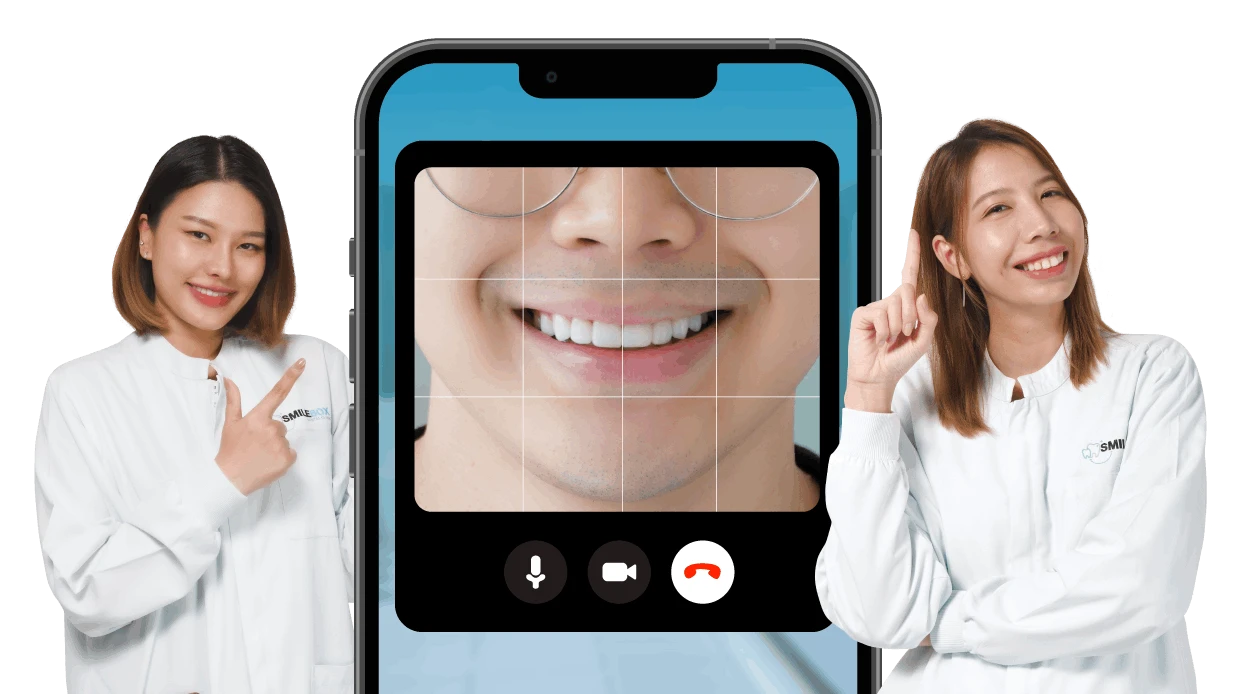
A good clinic coordinates this with you prior to booking your flight. SmileBox operates via an international patient coordinator who plans your treatment stages, the number of visits, and provides a detailed cost breakdown beforehand. For patients unable to travel for an initial assessment, the clinic provides a virtual consultation via Google Meet, or you may email several clear photos of your teeth to begin the discussion. Your dentist will provide your exact timeline, as it varies based on your case, bone condition, and any necessary preparatory treatments.
Why Choose SmileBox Dental Clinic in Bangkok
SmileBox Dental Clinic supports overseas patients through an international patient coordinator, virtual consultations, and two branches in Bangkok offering dental implants. A few things SmileBox offers overseas patients:
- Established implant systems: SmileBox uses globally recognized implant brands including Straumann, Neodent, and Megagen from Switzerland and South Korea, each backed by decades of clinical research.
- Warranty on implant fixtures: Coverage, conditions, and exclusions differ by implant system and are set out in writing before treatment begins.
- Specialist-led, transparent care: Co-founders Dr. Vishesh Bhatia and Dr. Vikram Bhatia lead an educate-first approach, so you understand your options, timeline, and exact costs before treatment starts.
- Full digital planning: 3D CBCT scanning, iTero digital scans, and CAD/CAM technology help your dentist plan implant placement and cosmetic treatment. Results vary from patient to patient.
- A trip made simple: An international patient coordinator, a virtual consultation program, fluent English-speaking staff, and two Bangkok branches in Thonglor and Riverside keep the whole process manageable from abroad.
If you are planning to travel to Thailand for dental treatment, understanding your options before booking flights can help you make a more confident and informed decision.
Schedule a virtual consultation with SmileBox Dental Clinic, where our experienced dentists can assess your case, discuss treatment suitability and timelines, and provide a personalized treatment plan tailored to your goals. This allows you to explore your options and organize your trip with clarity and confidence before arriving in Bangkok.
Contact SmileBox Dental Clinic
Phone : (+66)2-402-9542
WhatsApp : (+66)63-352-3691
Email : contact@smileboxclinic.com


References
- Thailand Dental Tourism Market Research Report. Retrieved November 3, 2026, from https://www.medicaltourismco.com/research/thailand-dental-tourism-market-research-report
- Thailand Medical Tourism in 2026 and Why It Keeps Growing. Retrieved November 3, 2026, from https://www.thailandprivilege.co.th/why-thailand/medical-tourism-in-thailand
- Thailand Dental Tourism Prices 2026. Retrieved November 3, 2026, from https://realdentalcosts.com/en/dental-tourism/thailand-dental-tourism-prices/
- Thailand Healthcare: Market Intelligence. Retrieved November 3, 2026, from https://www.trade.gov/market-intelligence/thailand-healthcare-songklanagarind-hospital
- Why Should I Travel to Thailand for Dental Treatment? Retrieved November 3, 2026, from https://smileboxclinic.com/why-should-i-travel-to-thailand-for-dental-treatment
Frequently Asked Questions About Dental Tourism in Thailand (FAQs)
Dental care in Thailand can be safe when you choose a licensed clinic with clear infection-control practices. Every treatment carries some risk, and your dentist will explain the risks for your case. As of February 2025, the Joint Commission International had accredited 63 Thai medical institutes, the most in Southeast Asia, though accreditation is held by individual institutes. Every dentist is also licensed by the Dental Council of Thailand. Safety still depends on the clinic, so look for recognized certifications, specialist-led treatment, and strict sterilization protocols before you book.
Dental treatment in Thailand may cost less than in Western countries. Published general estimates put a single implant at roughly $3,500 to $6,500 in the US and $900 to $2,500 in Thailand. Your final savings depend on the number of teeth, the implant system, and any preparatory work needed.
Not always. Cosmetic work like veneers and crowns can often be completed within a single visit of a few days to a week. Dental implants need a healing period of at least two months for the bone to bond with the implant, so they usually require either two trips or a first visit followed by a virtual follow-up and a return for the final restoration. Your dentist confirms the timeline based on your case.
Not at clinics set up for international patients. Many Bangkok clinics, including SmileBox, have fluent English-speaking teams and an international patient coordinator who explains your treatment plan and costs clearly. You can also arrange a virtual consultation over Google Meet or email photos of your teeth before you travel, so your plan is clear before you arrive.